Mass Flow Meter Selection for Real Process Conditions
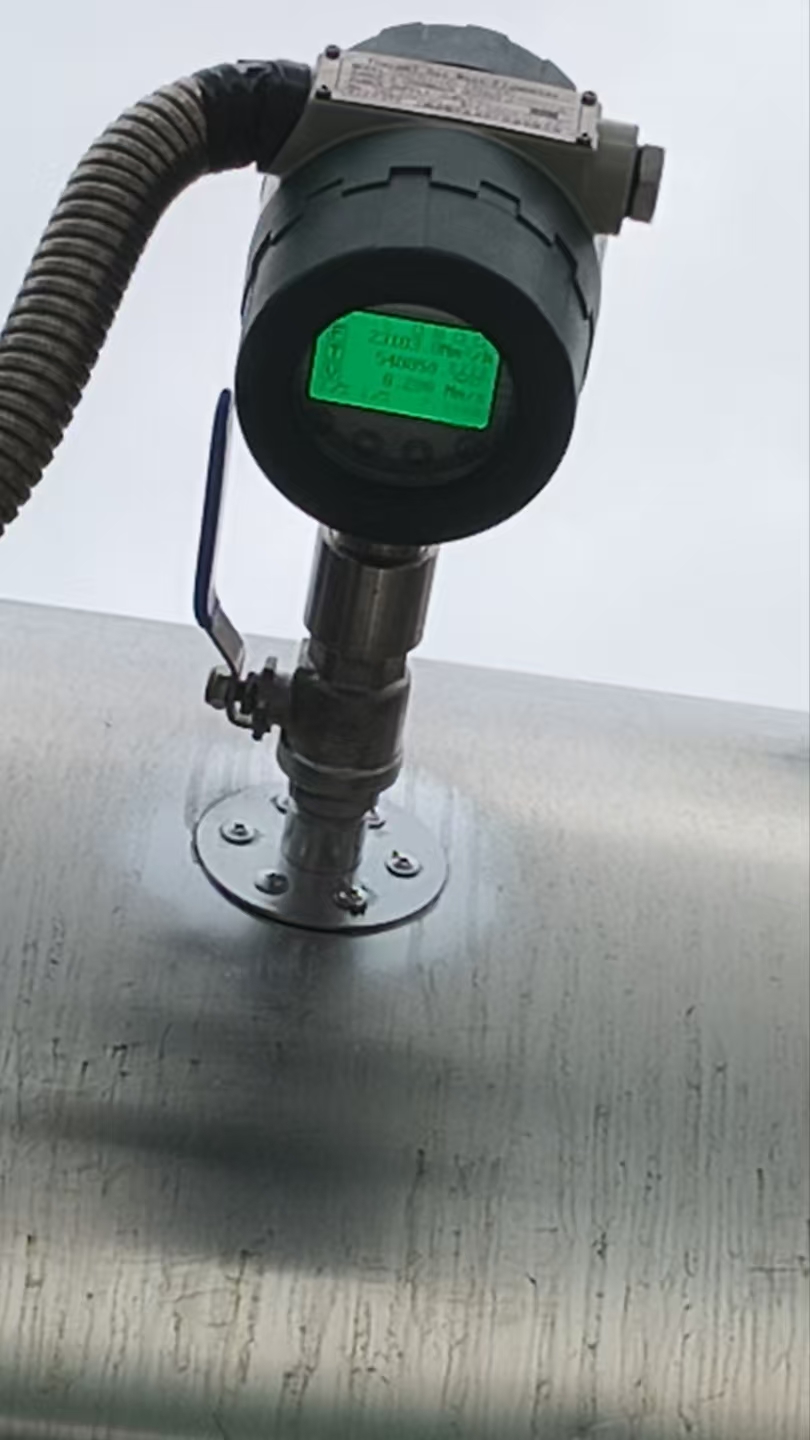
Mass flow meters provide a direct reading of mass rather than volume, which reduces the effect of temperature and pressure on measurement. In practice, the selection question is not simply “which mass flow meter is accurate?” but “which mass flow meter fits my process conditions?” This article explains how to match Coriolis, thermal, steam, and low-flow mass flow meter technologies to real project requirements, using product and application data from Silver Automation Instruments, a manufacturer founded in 2010 in Nanjing, Jiangsu, China, that supplies flow, pressure, level, and data-logging instruments to markets including Southeast Asia, South America, and Africa.
Why Application Fit Is the Core Selection Problem
A mass flow meter is a process control device, not a commodity. Buyers often compare price lists before verifying fluid phase, operating temperature, pressure range, pipe size, hazardous area classification, and required output. That order creates mismatches. A meter which works well for compressed air can be unsuitable for high-viscosity syrup. A meter selected for clean gas may fail with wet steam. A standard instrument may not be acceptable for custody transfer if it does not meet accuracy and approval requirements.
For an industrial buyer moving from research into evaluation, the task is to convert a project description into a meter specification. The relevant inputs include the fluid itself, whether mass or volume is the billing basis, whether density is needed, whether the fluid contains solids or moisture, and how the reading will be integrated with a DCS or PLC.
Market Context for Mass Flow Meter Selection
Market data helps explain why mass flow meter selection matters. The global flow meter market was valued at about USD 10.64 billion in 2024 and is projected to reach USD 15.17 billion by 2030, according to Grand View Research. Coriolis flow meters accounted for approximately 22% of the global flow meter market share in 2024, according to Fortune Business Insights. The thermal flow meter market was estimated at about USD 1.728 billion in 2024, with a projected CAGR of 4.83%, according to Market Research Future.
By application, the oil and gas industry is the largest segment, accounting for about 29.6% of the flow meter market, according to Fact.MR. The same source-based market view identifies Emerson, operating under the Micro Motion brand, and Endress+Hauser as the top two flow meter companies, with approximately 12% and 14% market share respectively. For buyers, this context matters because supplier selection often starts with a technology match, not only with a brand name.
Standards also play a role in project fit. ISO 6996:2024 specifies requirements for meter verification using master Coriolis mass flow meters, particularly for bunkering applications. NIST Handbook 44, 2024 Edition, Section 3.37 provides technical requirements for mass flow meters in commercial measurement. These standards are useful reference points when a project involves legal metering or custody transfer.
Mass Flow Meter Technologies: What the Specifications Mean
Coriolis Mass Flow Meter
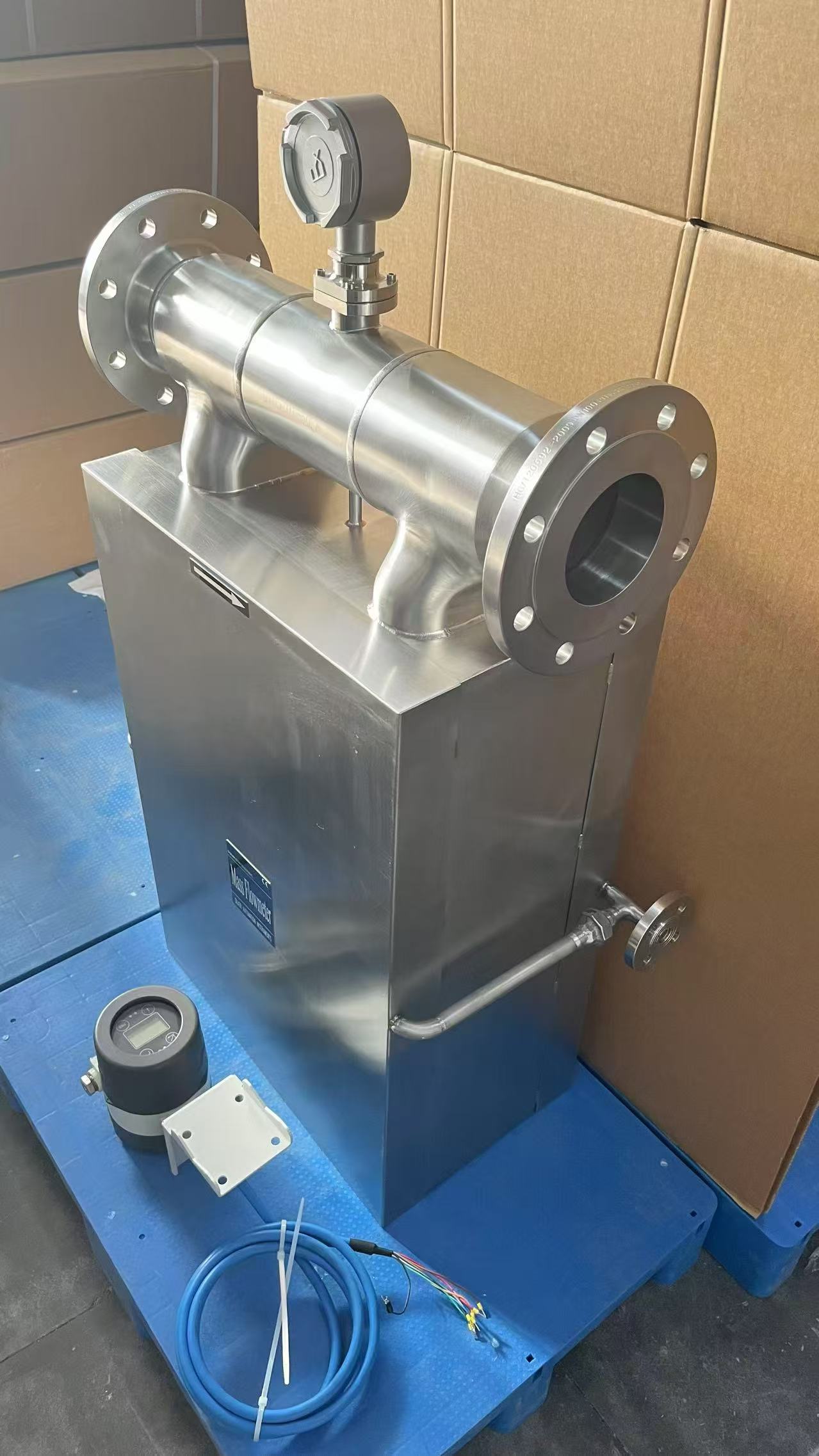
Silver Automation Instruments supplies the SH-CM Coriolis mass flow meter in configurations for high-pressure, cryogenic, fuel, and gas applications. It uses the Coriolis principle, is made of stainless steel 316L, and is ATEX certified. The meter covers sizes from about 1 mm to 300 mm, a flow range of about 10 kg/h to 1500 t/h, and a fluid temperature range of -200°C to 350°C. The protection level is IP65. Output and communication options include 4-20mA, pulse, frequency, MODBUS RTU, HART, Profibus-DP, and Profibus-PA.
The SH-CMF-FE Micro Coriolis mass flow meter is designed for lower flow ranges. It has an accuracy of ±0.25% to ±0.5%, a flow range of 40 g/h to 1000 kg/hr, pressure ratings of 30 bar or 100 bar, outputs of 4-20mA, 0-5VDC, or 1-5VDC, and communication via RS485 or RS232. It is suitable for process fluids in food, petrochemical, pharmaceutical, fermentation, semiconductor, and fuel cell applications.
Thermal Mass Flow Meter
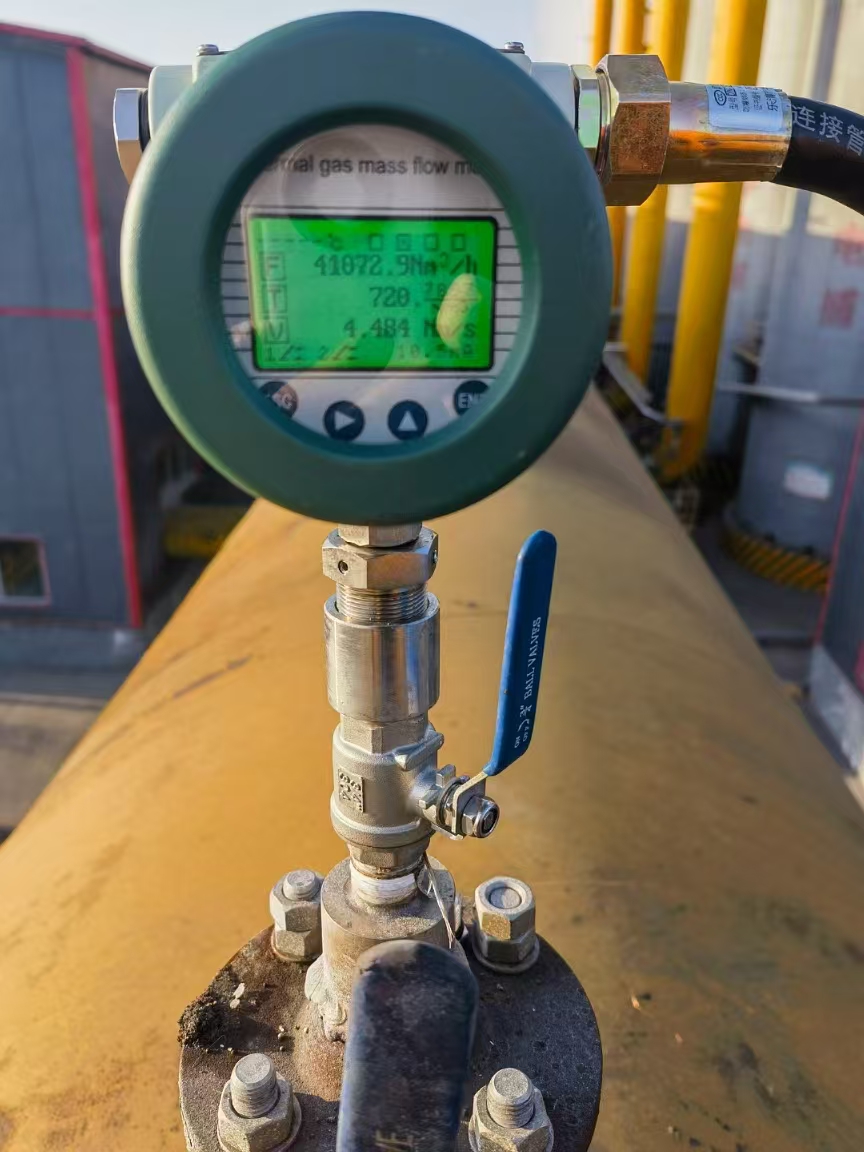
The SRK-100 thermal mass flow meter is available as an insertion type, inline type, ATEX version, or remote display version. Sensor size ranges from DN15 to DN2000, gas temperature from -20°C to 300°C, and the primary output is 4-20mA with RS485, MODBUS RTU, or HART communication. Gas compatibility includes air, compressed air, N2, natural gas, biogas, O2, and LPG. The wetted material is stainless steel 304.
For very low gas flow, the SRK-DL low flow thermal mass flow meter covers 2 sccm to 30 SL/M with ±1% F.S accuracy, outputs of 0-5V, 4-20mA, or 1-5V, RS232/485 or MODBUS communication, and power supply options of ±15VDC or 24VDC. It is used in semiconductor, medical, analytical instrument, fuel cell, and environmental monitoring applications.
Steam Mass Flow Meter
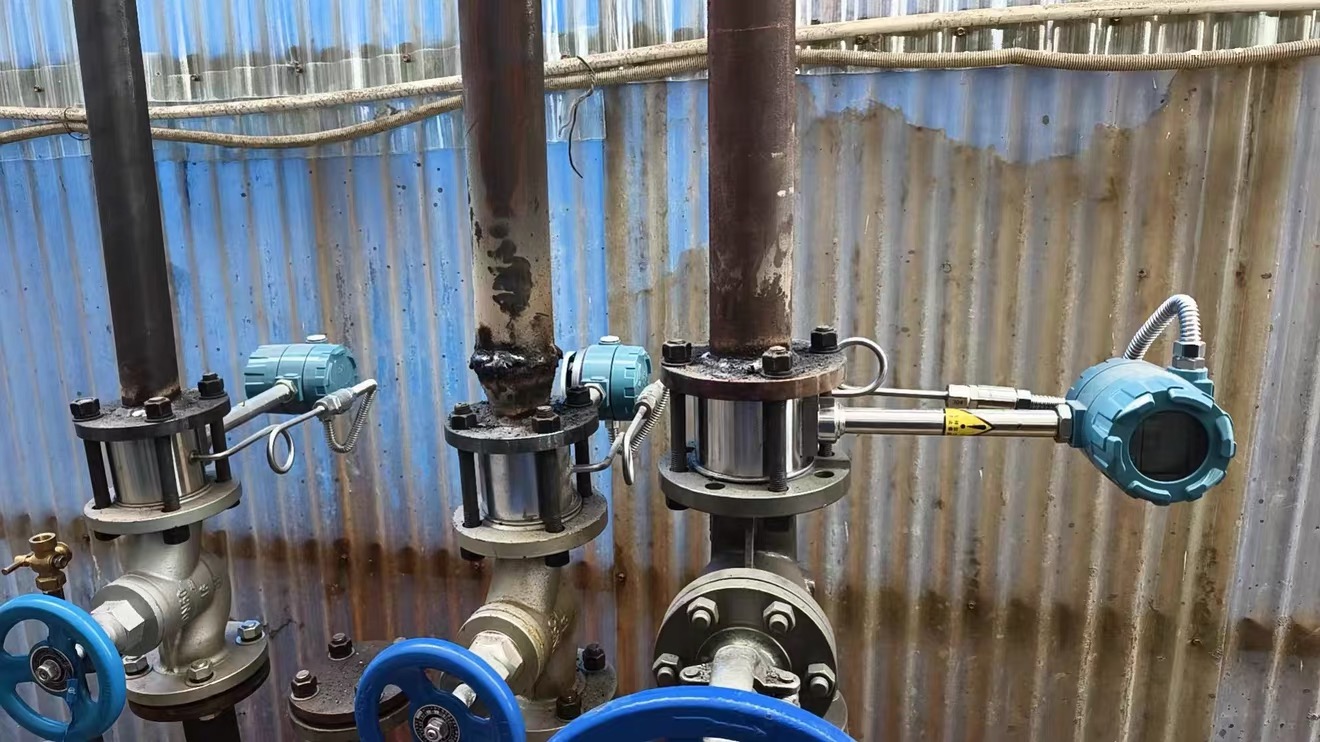
The STLU-VFN steam mass flow meter uses the vortex flow meter principle and is designed for saturated steam and superheated steam. Pipeline size ranges from DN15 to DN300, maximum steam temperature is 500°C, and the meter is ATEX approved. It includes built-in temperature and pressure compensation. Flow sensor material is stainless steel 304 or 316, with process connections such as flanges, wafers, screws, or tri-clamp. Typical industries include power generation, petrochemical, food processing, pharmaceuticals, and district heating.
When buyers search for a digital mass flow meter, the practical requirement is usually communication with a control system. Across the SH-CM and SRK series, 4-20mA, pulse, frequency, RS485, MODBUS RTU, HART, Profibus-DP, and Profibus-PA are available. Confirming this early avoids integration problems later.
Step-by-Step: Matching a Mass Flow Meter to Your Project
- Identify the fluid and phase. Determine whether the process fluid is gas, liquid, steam, or a mixture. For compressed air and many industrial gases, thermal mass flow meters are often specified. For high-viscosity liquids, fuel, crude oil, and syrup, Coriolis mass flow meters are more commonly used. For steam lines, the STLU-VFN is a purpose-built option.
- Define the measurement goal. If the project needs direct mass flow plus density, a Coriolis meter can provide multiple process values from one sensor. If the goal is gas mass flow in a large duct, an insertion thermal meter may be sufficient. If the goal is steam energy balancing, temperature and pressure compensation are important.
- Map temperature and pressure limits. The SH-CM Coriolis meter covers -200°C to 350°C. The SRK-100 thermal meter covers gas temperatures from -20°C to 300°C. The STLU-VFN steam meter handles steam up to 500°C. High-pressure project experience includes nitrogen measurement at around 700 bar.
- Check accuracy and commercial requirements. Custody transfer applications often require ±0.5% accuracy or better with legal approval. Some oil and fuel projects report accuracy around 0.1% to 0.5%. Hazardous area installations may require Ex d, Ex ia, or ATEX/IECEx certification for Zone 0 or Zone 1.
- Choose installation style and pipe size. Insertion thermal meters cover large line sizes from DN15 to DN2000. Inline Coriolis meters are suitable for pipe sizes from about 1 mm to 300 mm. In a crude oil application, the Coriolis sensor required no straight pipe sections before or after the meter and no upstream filter.
- Confirm output and communication. A project connected to a DCS or PLC usually needs a defined analog or digital signal. Common options include 4-20mA, pulse, frequency, RS485, MODBUS RTU, HART, Profibus-DP, and Profibus-PA.
- Review customization, quality control, and delivery. Silver Automation Instruments supports OEM/ODM projects with logo customization, a monthly capacity of 2000 units, and a MOQ of 1 unit. Calibration testing is part of quality control. Standard orders are commonly quoted at 7-10 working days, while OEM orders are quoted at 10-12 working days.
Use Cases: Mass Flow Meters in Real Applications
High-Viscosity Syrup and Asphalt
A project in Thailand used a Coriolis mass flow meter to measure high-viscosity syrup. The meter has operated for more than 5 years, measured mass flow with accuracy up to 0.1%, and also displayed volume flow and density. A project in Serbia used two Coriolis units to measure high-temperature asphalt at approximately 250°C. The insulation jacket design prevented asphalt solidification, and the sensor continued to operate with asphalt containing slight impurities.
Steam Flow Measurement in South Africa
Ten steam mass flow meters were supplied to a South Africa project for saturated steam flow measurement and have operated for more than 5 years. The project required high-temperature steam measurement up to 400°C. The STLU-VFN meter simultaneously detects steam temperature and pressure to calculate mass flow.
Compressed Air, Biogas, and Natural Gas
Three thermal mass flow meters were installed in the UAE for compressed air flow measurement and have operated for more than 10 years. In Singapore, four insertion thermal mass flow meters were used to measure low-pressure biogas in a 4-inch pipeline at around 10 mbar, with the sensor sprayed with PTFE for slightly corrosive gas. In Brazil, 20 thermal mass flow meters were supplied for natural gas flow measurement, with delivery reported at around 5-7 working days.
Crude Oil and Fuel Oil
A Saudi Arabia project used two Coriolis mass flow meters to measure dirty crude oil. The meters operated for 10-15 years, did not require straight pipe sections before or after the sensor, did not require filters, and achieved accuracy up to 0.1%. Another Saudi project used three Coriolis meters for fuel oil custody transfer, with accuracy around 0.1% to 0.5%. The project report notes lower cost compared with top brands such as Emerson.
Cryogenic Liquid Oxygen and High-Pressure Nitrogen
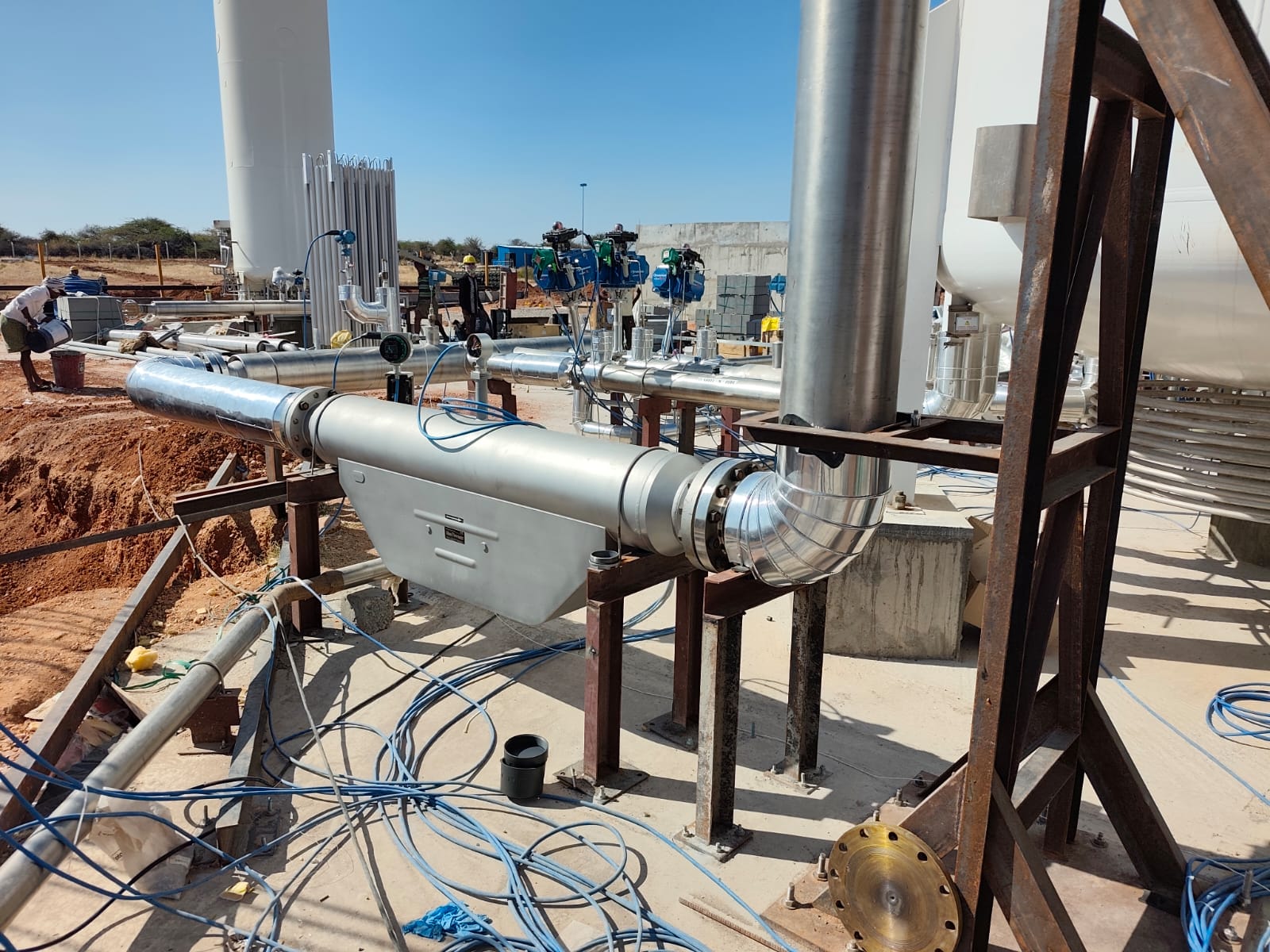
An India project used three Coriolis mass flow meters to measure liquid oxygen at -183°C for around 10 years. The project achieved stable measurement with accuracy within 0.2% to 0.5%. A Chile project used one unit to measure nitrogen gas at around 700 bar for more than 3 years, using a high-pressure design capable of withstanding 700 bar or higher.
Application Fit Comparison Table
| Process Condition | Recommended Technology | Why It Fits | Project or Specification Evidence |
|---|---|---|---|
| High-viscosity liquids such as syrup and asphalt | Coriolis mass flow meter SH-CM | Direct mass and density measurement; stable with high-viscosity fluids | Syrup accuracy up to 0.1%; asphalt at about 250°C with insulation jacket |
| Custody transfer oil, fuel oil, and crude oil | Coriolis mass flow meter SH-CM | High accuracy; handles dirty or particle-containing fluids without filters | Accuracy around 0.1%-0.5%; 10-15 years of crude oil operation |
| Compressed air, natural gas, and biogas | Thermal mass flow meter SRK-100 | Direct gas mass flow; insertion option for large lines; low-pressure gas capability | UAE compressed air 10+ years; Brazil natural gas 20 units; Singapore low-pressure biogas |
| Saturated and superheated steam | Steam mass flow meter STLU-VFN | Vortex principle with built-in temperature and pressure compensation | South Africa saturated steam project; steam temp up to 400°C |
| Very low gas flow and leak detection | Low Flow Thermal mass flow meter SRK-DL | Flow range from 2 sccm to 30 SL/M; ±1% F.S accuracy | Air leak detection down to 2 ml/min for more than 10 years |
| Cryogenic liquids such as liquid oxygen and LNG | Coriolis mass flow meter SH-CM | Temperature range down to -200°C; cryogenic design with special sealing and thermal isolation | India liquid oxygen at -183°C; cryogenic pipe size 1 mm to 300 mm |
The table is not a complete substitute for a detailed datasheet. A supplier should verify compatibility with the specific fluid, pressure, temperature, pipe size, material, and control signal required.
FAQ: Common Questions When Matching a Mass Flow Meter to a Project
What certifications should a mass flow meter have for hazardous or custody-transfer applications?
For custody transfer, accuracy of ±0.5% or better is often expected, with legal approval in many jurisdictions. Hazardous area installations may require Ex d, Ex ia, or ATEX/IECEx certification for Zone 0 or Zone 1. Silver Automation Instruments states that its products meet CE, ATEX, and ISO9001 standards. Models mentioned in this article include the ATEX-certified SH-CM Coriolis mass flow meter and the ATEX-approved STLU-VFN steam mass flow meter. Buyers should also check verification standards such as ISO 6996:2024 and NIST Handbook 44 Section 3.37 when commercial measurement or bunkering is involved.
How do I know whether a Coriolis or thermal mass flow meter can handle my process?
First define the fluid phase. Coriolis mass flow meters are used for liquids, gases, high-viscosity fluids, slurries, and cryogenic fluids; the SH-CM covers about 1 mm to 300 mm pipe sizes and -200°C to 350°C fluid temperature. Thermal mass flow meters are used for gases such as air, compressed air, N2, natural gas, biogas, O2, and LPG; the SRK-100 covers DN15 to DN2000 and -20°C to 300°C gas temperature. Low-flow thermal meters handle 2 sccm to 30 SL/M. The STLU-VFN steam meter is specifically for saturated and superheated steam. Sending fluid type, pressure, temperature, pipe size, and control signal is the fastest way to confirm capability.
Is a thermal mass flow meter more budget-friendly than a Coriolis meter?
Thermal mass flow meters are frequently used when the process fluid is a gas and the goal is energy monitoring, leak detection, or flow control. An insertion-type thermal meter provides a practical installation for large pipes. Coriolis meters are usually selected when direct mass accuracy, density, high viscosity, or custody transfer is required. Project examples in this article show thermal meters selected for compressed air, biogas, and natural gas at lower project cost than some alternatives. Budget depends on range, pipe size, wetted material, output, and certification, so a supplier should quote against a defined specification.
Can I order a single unit for process evaluation?
Silver Automation Instruments supports OEM/ODM projects with a MOQ of 1 unit and a monthly capacity of 2000 units. This makes it possible to order one unit for evaluation before broader deployment. Calibration testing is part of the quality control process, and remote support is available after delivery. The project team can confirm the model, output signal, material, and calibration range before ordering.
What lead time should I plan for?
Standard orders are commonly quoted at 7-10 working days. OEM and customized orders are quoted at 10-12 working days. In project examples, thermal mass flow meters for compressed air and natural gas were delivered within about one week and 5-7 working days respectively. To confirm current lead time for a specific model, contact sales@silverinstruments.com or WhatsApp +86 18936759191.
Conclusion
Mass flow meter selection is project-specific. The correct starting point is a clear process description: fluid, phase, temperature, pressure, pipe size, accuracy target, hazardous area class, and control signal. For high-viscosity liquids, custody transfer hydrocarbons, and cryogenic fluids, Coriolis direct mass measurement is a suitable fit. For compressed air, natural gas, biogas, and other industrial gases, thermal mass flow meters provide direct gas mass flow. For saturated and superheated steam, a steam mass flow meter with temperature and pressure compensation is more appropriate. For very low gas flow and leak detection, a low-flow thermal meter can detect flows down to 2 sccm.
Need a mass flow meter matched to your process?
Contact Silver Automation Instruments at www.silverinstruments.com or download the product brochure.

Have Questions or Need More Details?
Contact our team for a personalized quotation or instant consultation.
Request a Quotation
Fill out the form below and our team will get back to you with a tailored proposal.
WhatsApp Direct Chat
Prefer to chat in real-time? Message us on WhatsApp for instant assistance & quick answers.
- Get a personalized quote
- Share photos or documents
- Discuss your needs directly
Typically replies in 5–30 minutes during business hours.