
Low Flow Meter Guide: Coriolis, Thermal or Vortex for Your Line
Short answer: match the sensing principle to the quantity your line actually needs measured. A micro Coriolis meter measures mass directly and suits low-flow liquids, viscous media and dense gases; a low flow thermal mass meter suits gas lines down to a few sccm; a vortex steam mass meter derives mass flow from vortex frequency with live temperature and pressure compensation on DN15–DN300 steam lines. Pressure rating, wetted material, process connection and built-in compensation then decide whether the chosen principle can physically sit in your pipework.
Most low flow selection errors are not accuracy errors. They are matching errors: the right principle bought in the wrong pressure class, the right body fitted with the wrong connection, or a steam meter ordered without the compensation that makes its mass output meaningful. This guide works from the line backwards, so that the principle, the specification and the acceptance test all point at the same measurement.
The reference hardware here is the low flow range from Silver Automation Instruments, a Nanjing-based instrument manufacturer founded in 2010 that produces flow, pressure, level and data-logging equipment and exports roughly 95% of its output. The three families used throughout are the SH-CMF-FE Micro Coriolis mass flow meter, the low flow thermal mass flow meter, and the STLU-VFN vortex steam mass flow meter.
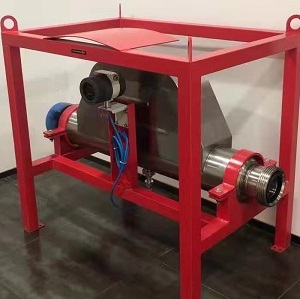
Cover: a high-pressure low flow mass flow meter. On many low flow lines the pressure rating, not the turndown, is the first constraint that removes options.
Why Low Flow Lines Resist Type-Only Selection
At low flow rates, the measurement is decided less by the meter's headline range than by what the process gives the sensor to work with: a stable velocity profile, a known phase, a workable pressure, and a temperature the wetted parts can hold. Datasheets describe capability at reference conditions. A line describes the conditions that actually apply.
Three mismatch patterns account for most of the problems buyers bring to a technical review:
- Measuring the wrong quantity. A gas line specified on volume flow requires density to become mass, and density on a low-pressure gas line is exactly the value nobody can state confidently. Direct mass measurement removes that step; a gas-oriented thermal meter removes it differently by responding to mass transfer at the sensor.
- Buying steam capability as a temperature number alone. A meter rated for high-temperature steam still needs live temperature and pressure inputs to convert vortex frequency into mass flow. Without compensation, mass is calculated from an assumed pressure that drifts with load.
- Choosing the principle before the pipe class. Pressure rating, wetted material and connection type are ordered last, then turn out to be unavailable in the chosen body, and the project restarts at the quotation stage.
This guide reverses that order: measured quantity first, line envelope second, mechanical fit third, documentation last.
Industry Background: Where Small Lines Are Multiplying
Low flow measurement is growing because the processes that need it are growing. Grand View Research identifies the 2-inch and smaller pipe size segment as the fastest-growing part of the flow meter market through 2030, driven by pharmaceutical and food & beverage demand. Those are precisely the line sizes where a meter's low-end behaviour, not its maximum capacity, determines whether the installation works.
Segment data points in the same direction. Market Research Future values thermal flow meters, the principle most often applied to low gas flow rates, at USD 1.73 billion in 2024 with a projected USD 2.9 billion by 2035. Fortune Business Insights places Coriolis meters at 26.77% of the intelligent flow meter market in 2026, reflecting their role where direct mass measurement carries a custody or formulation consequence. SNS Insider projects thermal mass flow controllers for semiconductor applications growing at a 4.5% CAGR between 2026 and 2035, a segment built almost entirely on millilitre-per-minute gas control.
The practical implication for a buyer is that low flow instrumentation is no longer a niche accessory bolted onto a main process line. It is often the measurement that governs yield, dosing accuracy or emission accounting, and it is specified by engineers who expect the meter to answer a defined question rather than to cover a range.
Three Sensing Principles, Three Different Measurements
Micro Coriolis (SH-CMF-FE): Direct Mass for Liquids, Slurries and Dense Gases
The SH-CMF-FE Micro Coriolis mass flow meter determines mass flow from the oscillation behaviour of a vibrating measuring tube, so the reading is mass by construction rather than by conversion. Its published low flow envelope runs from 40 g/h to 1000 kg/hr, with accuracy stated at ±0.25% to ±0.5%. Because the measurement is mass-based, viscosity, density change and entrained solids affect the process but not the principle.
Selection-critical specifications for this family:
- Pressure rating: 30 bar or 100 bar as the standard choice, decided by the line's design pressure rather than by expected operating pressure.
- Wetted materials: stainless steel 304, 316 or 316L, selected against the medium rather than by default.
- Process connections: flange, wafer, screw or tri-clamp, so the meter can meet an existing pipe class instead of forcing a spool redesign.
- Compensation: built-in temperature and pressure compensation, which keeps the mass output consistent as process conditions move.
Where it stops being the right answer: the 40 g/h to 1000 kg/hr envelope caps the line size it can serve, and steam service belongs to a different principle. A micro Coriolis chosen for a large steam header is a category error, not a tuning problem.
Coriolis meters from the same manufacturer have been applied well outside the ordinary liquid case. A Chilean installation measures nitrogen gas at around 700 bar with a high-pressure sensor design rated for 700 bar or higher; an Indian cryogenic application measures liquid oxygen at −183 °C (90 K) with three units; and a Malaysian unit uses tantalum wetted material for corrosive chlorine gas. Each of these is a materials-and-pressure decision layered on top of the mass-measurement decision.
Low Flow Thermal Mass (SRK-DL): Gas Mass Down to 2 sccm
The low flow thermal mass flow meter derives gas mass flow from heat transfer at a heated sensor. It is the family to reach for when the medium is a gas, the pressure is modest, and the flow rate is small enough that differential-pressure methods lose resolution.
The clearest capability statement comes from an installed leak-detection application in China, where three units detect air leakage down to 2 sccm (2 ml/min) and have remained in service for more than ten years. That figure is the practical floor for this principle in the manufacturer's range: two standard cubic centimetres per minute, not two litres.
Related thermal installations show how the same principle scales across gas duties:
- Biogas, Singapore: four SRK-100 insertion-type meters with PTFE-coated sensors measure biogas in a 4-inch pipeline at around 10 mbar. The PTFE coating addresses slightly corrosive biogas, and the insertion design avoids cutting the line. The installation has run for more than five years.
- Natural gas, Brazil: twenty thermal mass flow meters have provided stable measurement for a period exceeding ten years, with delivery quoted at 5–7 working days.
- Compressed air, United Arab Emirates: three units have measured compressed air for more than ten years.
The SRK-100 variant covers a gas temperature range from −20 to 300 °C and uses an insertion sensor format. Where the principle stops: thermal mass meters answer a gas question. A line carrying a liquid, a slurry or saturated steam needs a different sensor, and a dirty gas may need a coating or material decision before the range decision.
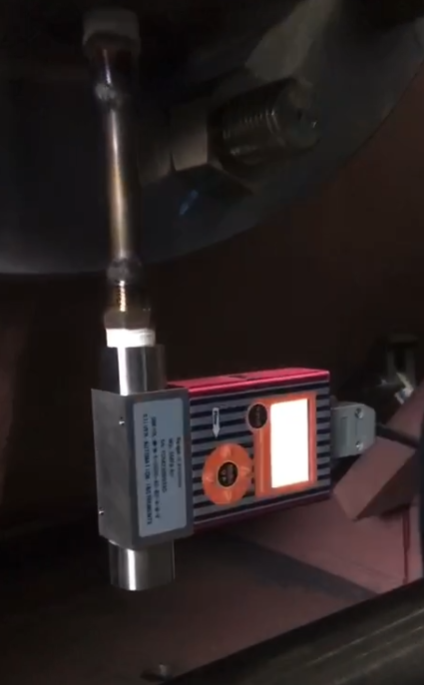
A micro thermal mass flow meter resolving air flow at 2 ml/min — the low-flow end where thermal sensing keeps resolution that differential-pressure devices lose.
Vortex Steam Mass (STLU-VFN): Compensated Mass on DN15–DN300
The STLU-VFN vortex steam mass flow meter measures the frequency of vortices shed behind a bluff body and converts that frequency into mass flow using live temperature and pressure. It is the family for steam, with a maximum steam temperature of 500 °C and line size coverage from DN15 to DN300.
The reason compensation is not optional becomes clear in the field data. A South African installation of ten units measures saturated steam, with the meter simultaneously detecting steam temperature and pressure to calculate mass flow, and has operated for more than five years with steam temperatures up to 400 °C. A steam system's mass flow depends on both volumetric flow and density; a vortex meter that reports frequency without density inputs reports a number that moves whenever the header pressure moves.
Where the principle stops: vortex shedding depends on a usable flow regime, so the low-flow end of the line must still be checked against the meter's sizing during selection. Steam service is also where a 500 °C rating and a DN15–DN300 range need to be matched against actual pipe class, not chosen from the top of the table.
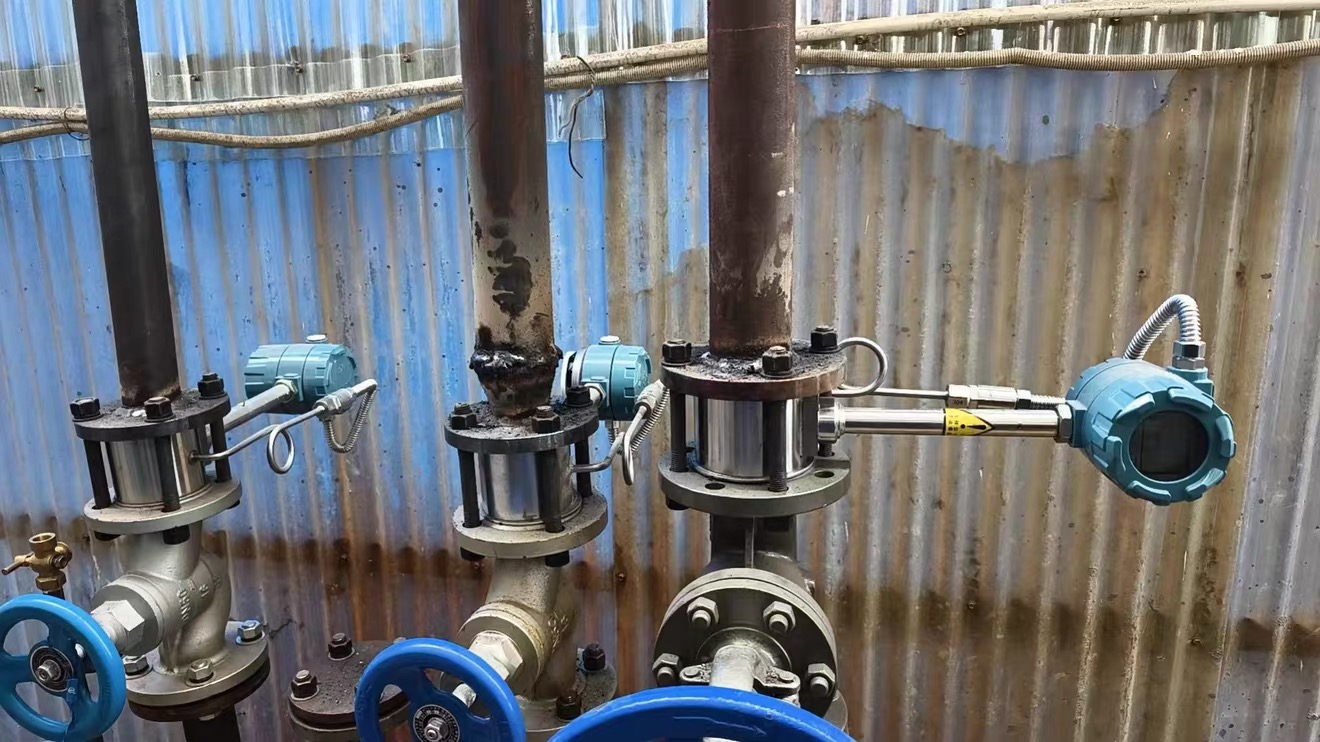
A vortex steam mass flow meter. Mass output depends on live temperature and pressure compensation, not on vortex frequency alone.
Line Parameters That Decide the Match
Once the principle is fixed, four mechanical and one electronic parameter determine whether the order can be built and accepted.
Pressure rating. The low flow range is offered at 30 bar or 100 bar. Choose against design pressure with margin, not against the gauge reading you normally see. Where the process exceeds both, the requirement moves into a high-pressure design, as the 700 bar nitrogen installation demonstrates, and the enquiry should say so at the first contact.
Wetted materials. Stainless steel 304, 316 and 316L cover most low flow duties. The medium decides which: chlorinated or saline media, corrosive gases and high-purity duties pull the choice in different directions, and the chlorine gas installation using tantalum shows what happens when stainless is not enough.
Process connection. Flange, wafer, screw or tri-clamp. Tri-clamp suits hygienic lines in food and pharmaceutical service; wafer and flange suit conventional pipe classes; screw connections suit small-bore laboratory and pilot skids. Selecting the connection at quotation stage avoids adapters, which add volume and change the flow profile at the sensor.
Temperature and pressure compensation. Built-in compensation means the meter corrects its own output rather than handing the correction to the control system. On steam this is essential; on mass-based Coriolis measurement it keeps the reading stable across process shifts.
Interface. Confirm the output you need from 4–20 mA, RS485/RS232 and MODBUS RTU, and confirm it at order stage. A meter with the right principle and the wrong protocol becomes a manual read point.
Matching Matrix: Principle Against Line Condition
| Selection parameter | Micro Coriolis — SH-CMF-FE | Low flow thermal mass | Vortex steam mass — STLU-VFN |
|---|---|---|---|
| Measured quantity | Direct mass flow | Gas mass flow via heat transfer | Mass flow from vortex frequency with temperature and pressure compensation |
| Best-fit medium | Low-flow liquids, viscous media, dense gases, cryogenic liquids | Gases from low to moderate pressure | Saturated and high-temperature steam |
| Low flow envelope | 40 g/h to 1000 kg/hr | Down to 2 sccm (2 ml/min) in installed leak detection | Line size DN15 to DN300 |
| Stated accuracy | ±0.25% to ±0.5% | Application-dependent; resolution at sccm level demonstrated | Derived from frequency plus live T and P inputs |
| Pressure capability | 30 bar or 100 bar standard; high-pressure designs applied up to 700 bar in field service | Suited to low-pressure gas lines, including ~10 mbar biogas | Matched to steam pipe class; 500 °C maximum steam temperature |
| Wetted materials | Stainless steel 304 / 316 / 316L | Stainless steel with PTFE-coated sensor option for slightly corrosive gas | Selected against steam pipe class |
| Process connection | Flange, wafer, screw or tri-clamp | Insertion type (SRK-100 format) | DN15–DN300 line sizes |
| Compensation | Built-in temperature and pressure compensation | Gas-side mass measurement at sensor level | Built-in temperature and pressure compensation for mass calculation |
| Interface options | 4–20 mA, RS485/RS232, MODBUS RTU | 4–20 mA, RS485/RS232, MODBUS RTU | 4–20 mA, RS485/RS232, MODBUS RTU |
| Typical industry fit | Chemical, pharmaceutical, food, fuel, cryogenic, high-pressure gas | Semiconductor, fuel cell, biogas, compressed air, natural gas, leak detection | Power generation, district and process steam |
Step-by-Step: From Line Data Sheet to Confirmed Sensor
Application Fit by Industry
Power generation. Steam headers and fuel forwarding lines. The STLU-VFN covers DN15–DN300 up to 500 °C steam temperature, and the ten-unit saturated steam installation in South Africa, running above five years with steam up to 400 °C, shows the compensation logic working in service. Fuel oil lines fall to the Coriolis side, where three units were supplied for custody transfer measurement in Saudi Arabia.
Pharmaceutical. Low-volume liquid dosing, media preparation and gas overlay. The Coriolis principle handles small liquid masses without density correction, and thermal meters handle the gas side. Hygienic tri-clamp connections and 316L wetted parts address the cleaning and material expectations of the sector.
Chemical and petrochemical. Corrosive and high-pressure duties dominate. A chlorine gas installation in Malaysia uses tantalum wetted material; a nitrogen line in Chile runs at around 700 bar; crude oil measurement in Saudi Arabia has continued for 10–15 years on the Coriolis principle.
Food and beverage. Viscosity is the selection variable. A Thai syrup installation measures high-viscosity syrup on a Coriolis meter and reads density and volume flow alongside mass, which matters when the product specification is defined by more than one property. A Serbian asphalt application, at approximately 250 °C with an insulation jacket to prevent solidification, extends the same logic to a far less forgiving medium.
Fuel cell and hydrogen test benches. Gas-side low flow dominates, which places the requirement with thermal mass measurement. Hazardous-area classification and material compatibility should be settled before the range, because both can remove options regardless of flow capability.
Semiconductor and microfluidics. Millilitre-per-minute and sccm-level gas control is the native territory of the thermal principle, and the 2 sccm leak detection installation is the clearest evidence of resolution at that scale. SNS Insider's projected 4.5% CAGR for semiconductor thermal mass flow controllers between 2026 and 2035 describes demand moving in the same direction.
Field Evidence: What Installed Units Show
- Chile — 700 bar nitrogen: one unit, in service more than three years, stable measurement at around 700 bar with a high-pressure sensor design rated for 700 bar or higher.
- India — cryogenic oxygen: three Coriolis units measuring liquid oxygen at −183 °C (90 K), with customer feedback reporting accuracy within 0.2% to 0.5%.
- Thailand — high-viscosity syrup: one unit, more than five years, with mass flow plus density and volume flow displayed.
- Serbia — asphalt at ~250 °C: two units, more than five years, with an insulation jacket preventing solidification and simultaneous temperature and density display.
- Singapore — biogas at ~10 mbar: four PTFE-coated insertion thermal meters in a 4-inch line, more than five years, low-pressure measurement achieved at low cost.
- China — 2 sccm air leak detection: three units, more than ten years, resolving leaks down to 2 ml/min.
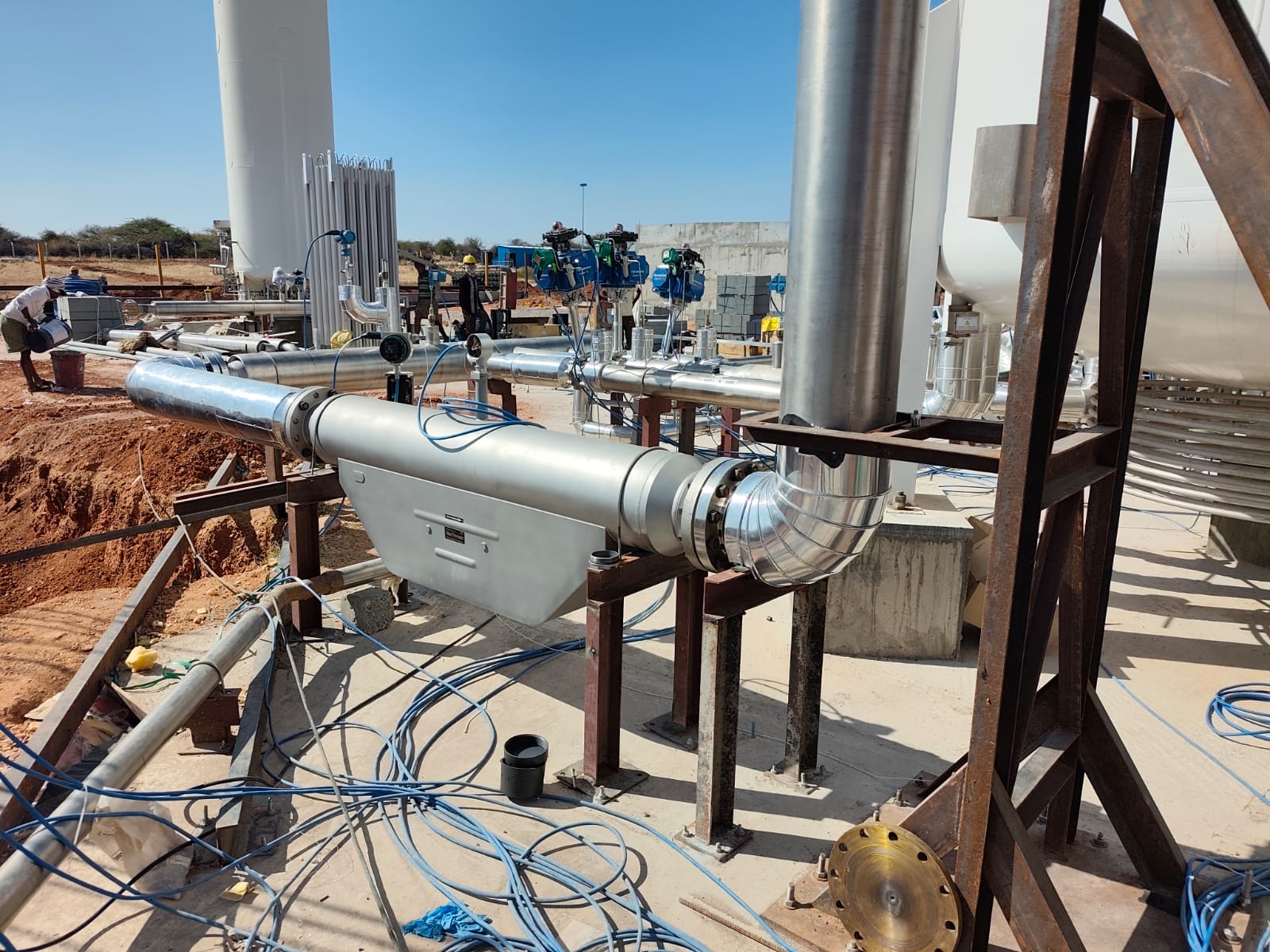
Cryogenic liquid oxygen service at −183 °C (90 K): a Coriolis installation where wetted-material and temperature decisions came before range selection.
Interfaces, ATEX and Documentation
Instrumentation is only as useful as the signal it delivers. The low flow range offers 4–20 mA, RS485/RS232 and MODBUS RTU, which covers direct PLC analogue input, short-distance serial diagnostics and networked polling from a SCADA or DCS layer. Confirm the protocol at order stage rather than at commissioning.
Hazardous-area documentation for this range includes ATEX certification to Zone 2 under certificate ICR/VC/HM251296, issued 2025-12-09 and valid to 2030-12-09, and certificate ECM 22 ATEX-B 0S05, issued 2022-02-21 and valid to 2027-02-20. CE certification is held under certificate 1N220422.SAIUW36 to EN IEC 61326-1:2021, issued 2022-05-05 and valid to 2027-04-21. The quality management system is certified to ISO 9001:2015 under certificate 79625Q0002107R0S, valid from 2025-07-10 to 2028-07-09.
Where a site requires traceable verification, quality control includes calibration testing as a routine production step, and a factory acceptance test can be added to the order.
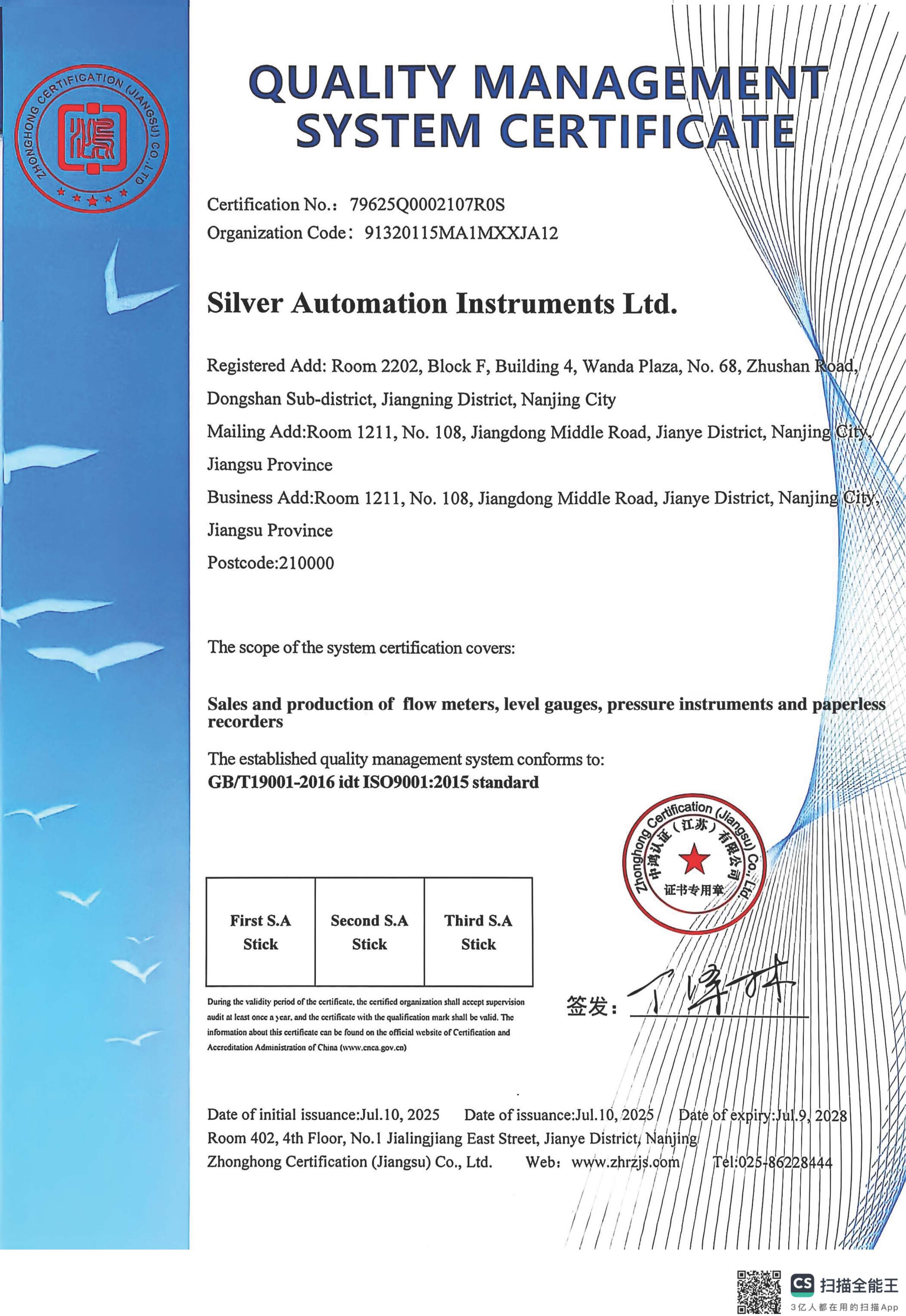
ISO 9001:2015 certification, certificate 79625Q0002107R0S, valid 2025-07-10 to 2028-07-09.
Purchasing Terms and Acceptance Criteria
Commercial terms for this range are structured for evaluation-stage buyers rather than for volume-only procurement:
- MOQ: 1 unit, which allows a single meter to be tested on a pilot line before a wider rollout.
- Delivery terms: EXW, FOB or CIF.
- Payment terms: 100% T/T in advance.
- Lead time: 10–12 working days, against a monthly capacity of 2000 units.
- Customisation: OEM and ODM production, including logo customisation.
- After-sales: remote support.
Acceptance is defined before shipment: a pre-shipment calibration test, visual inspection, and an optional factory acceptance test where the project requires witnessed verification. Writing these three items into the purchase order is what converts a datasheet claim into a documented result, particularly on low flow lines where the calibration rig, not the meter body, often limits what can be proven.
Frequently Asked Questions
Which approvals should be confirmed before ordering a low flow meter for a hazardous area?
Confirm that the certificate covers the zone and gas group of your installation. This range holds ATEX certification to Zone 2 under ICR/VC/HM251296, valid to 2030-12-09, and ECM 22 ATEX-B 0S05, valid to 2027-02-20, alongside CE certification 1N220422.SAIUW36 to EN IEC 61326-1:2021 and ISO 9001:2015 certificate 79625Q0002107R0S. Certificates should be checked for validity at the date of installation, not only at the date of quotation.
Is there an OEM low flow meter manufacturer option for microfluidic systems?
Yes. OEM and ODM production is offered for customers building microfluidic and analytical systems, including manufacture to a client's own specification or under the client's brand with logo customisation. For microfluidic gas lines the relevant capability is the thermal mass meter's resolution down to 2 sccm (2 ml/min), demonstrated in an air leak detection installation that has run for more than ten years. Minimum order quantity is 1 unit, which makes a single prototype build practical before a series order.
What are the standard purchasing terms?
MOQ is 1 unit; delivery terms are EXW, FOB or CIF; payment terms are 100% T/T in advance. These terms apply across the low flow range regardless of whether the meter selected is Coriolis, thermal or vortex.
What acceptance evidence is supplied with the meter?
Acceptance criteria are a pre-shipment calibration test, visual inspection, and an optional factory acceptance test. Calibration testing is a routine part of quality control, so the calibration record accompanies the meter rather than being an optional extra.
How long does delivery take once the specification is fixed?
Standard lead time is 10–12 working days against a monthly capacity of 2000 units. Where the application needs a material or pressure class outside the standard configuration, confirm the lead time together with the technical approval rather than after it, so the schedule reflects the meter that will actually be built. To start that confirmation, send the line data sheet to sales@silverinstruments.com or review the full range on silverinstruments.com.
Conclusion: Match the Line, Then Buy the Meter
Coriolis, thermal and vortex sensing answer three different questions. The SH-CMF-FE answers "what mass of liquid or dense gas passed this point", across 40 g/h to 1000 kg/hr at ±0.25% to ±0.5%, with a 30 bar or 100 bar pressure rating, stainless steel 304/316/316L wetted parts and a choice of flange, wafer, screw or tri-clamp connection. The low flow thermal meter answers "what mass of gas", down to 2 sccm in installed service. The STLU-VFN answers "what mass of steam", across DN15–DN300 up to 500 °C with built-in temperature and pressure compensation.
The specification work that follows — pressure class, material, connection, compensation, interface, acceptance test — is what turns a correct principle into a working installation. Buyers who settle those four mechanical and two documentation decisions before requesting a price get comparable quotations; buyers who settle them afterwards get revisions.
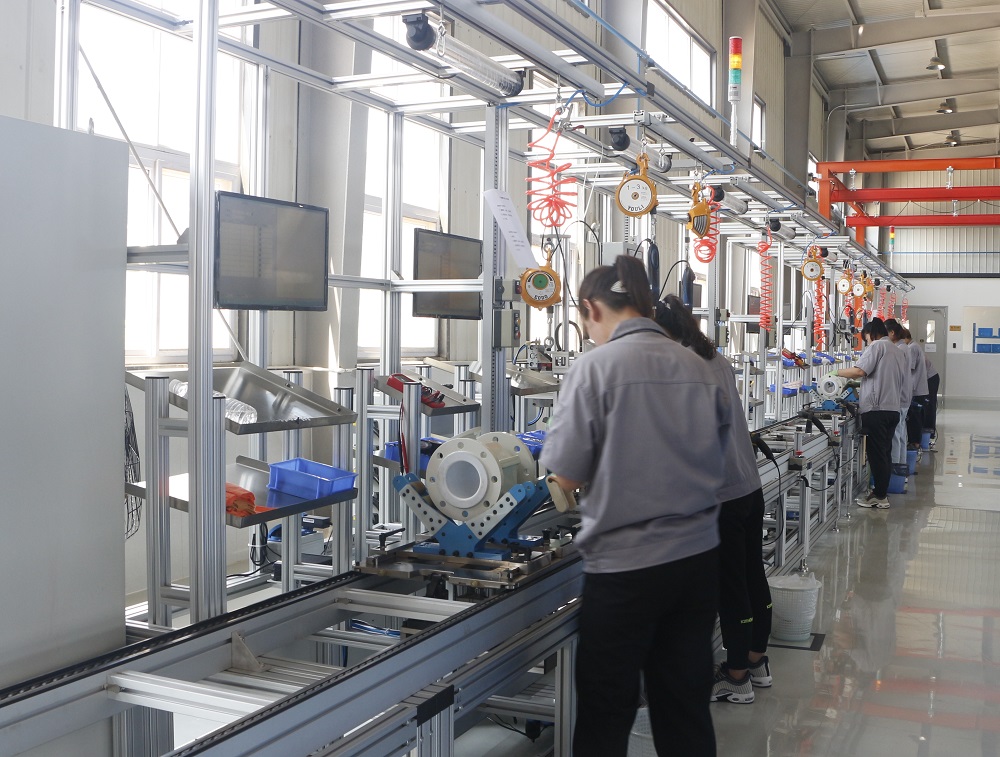
Assembly workshop: meters are built and calibration-tested before shipment, with an optional factory acceptance test for project orders.
Next Step
Send your line data — medium, minimum and maximum flow, design pressure, design temperature, line size and required output — and the three principles can be narrowed to one meter specification with a stated acceptance test. Download the product catalogue for full dimensional and ordering data: Silver Automation Instruments brochure (PDF).
Email: sales@silverinstruments.com · Phone: +86 25-52155837 · WhatsApp: +86 18936759191
Have Questions or Need More Details?
Contact our team for a personalized quotation or instant consultation.
Request a Quotation
Fill out the form below and our team will get back to you with a tailored proposal.
WhatsApp Direct Chat
Prefer to chat in real-time? Message us on WhatsApp for instant assistance & quick answers.
- Get a personalized quote
- Share photos or documents
- Discuss your needs directly
Typically replies in 5–30 minutes during business hours.