
Low Flow Meter Process Connections Compared: Flange, Wafer, Screw, or Tri-Clamp
Most low flow meter guides begin with the sensing principle and treat the process connection as a purchasing detail. For lines carrying grams per hour, standard cubic centimetres per minute, or millilitres per minute, the connection is exactly where a good measurement specification is either preserved or quietly lost.
Short answer: flange connections suit larger, higher-rated lines and steam service; wafer connections suit compact between-flange installations with short face-to-face length; screw (threaded) connections suit small ports on skids, manifolds and gas panels; tri-clamp connections suit hygienic circuits that are opened often for cleaning or product changeover. All four styles are available on the STLU-VFN steam mass flow meter for DN15–DN300 pipelines, in stainless steel 304 or 316, ATEX approved, with built-in temperature and pressure compensation.
Silver Automation Instruments, founded in 2010 and based in Nanjing, Jiangsu, China, manufactures flow, pressure, level and data-logging instrumentation for process automation. Its low flow portfolio includes the SH-CMF-FE Micro Coriolis mass flow meter, the SH-CM Coriolis mass flow meter, the SRK-DL low flow thermal mass flow meter, the SRK-100 thermal mass flow meter and the STLU-VFN steam mass flow meter. Export business accounts for 95% of total sales, with major markets in Southeast Asia, South America and Africa.

Why the process connection decides low flow performance
The SH-CMF-FE Micro Coriolis mass flow meter is rated at ±0.25% to ±0.5% over a flow range of 40 g/h to 1000 kg/hr. The SRK-DL low flow thermal mass flow meter is rated at ±1% F.S. over 2 sccm to 30 SL/M. Both figures describe the instrument under reference conditions, not the installation. The connection decides how much of that performance survives contact with the plant.
Three effects drive the decision:
- Bore continuity. A recess, a gasket that protrudes into the flow path, or a step between the pipe bore and the meter bore creates a pocket where liquid can stagnate or gas can be trapped. At the bottom of a 40 g/h range, that pocket matters more than the meter's accuracy figure, because it changes what the sensor actually sees.
- Number of seals. Every joint is a potential leak path and a potential source of ingress. A threaded body and a clamp connection each rely on a gasket; a flanged joint relies on a gasket between two mating flanges; a wafer body is clamped between two adjacent pipe flanges and depends on those flanges for its pressure rating.
- Positioning of the sensing element relative to temperature and pressure tappings. Steam mass flow depends on compensation. On the STLU-VFN, temperature and pressure compensation is built in, but the measurement is only representative if the meter sits where those conditions reflect the flowing steam rather than a stagnant leg or a bypass.
Two plant-level constraints then narrow the field further: the wetted material and the hazardous-area approval path. Stainless steel 304 and 316 are both used across the range — the STLU-VFN is available in stainless steel 304 or 316, the SRK-100 flow sensor is stainless steel 304, and the SH-CMF-FE and SH-CM bodies are stainless steel 316L.
Industry background: small lines, clean circuits and hazardous areas
Grand View Research valued the global flow meter market at USD 10.64 billion in 2024, with Europe holding the largest regional share of over 35%. The same source expects the 2-inch and smaller pipe size segment to see the fastest growth through 2030, driven by demand in pharmaceuticals and food & beverage sectors.
Market Research Future sized the thermal flow meter segment — the usual choice for low gas flow rates — at USD 1.73 billion in 2024, with a projection of USD 2.9 billion by 2035. P&S Intelligence valued the global microfluidic devices market, which includes micro flow sensors, at USD 22.1 billion in 2024, growing at a CAGR of 12.2%.
The practical consequence for buyers is that most new low flow measurement points are small-bore, frequently hygienic or inside ATEX zones, and increasingly expected to deliver compensated mass flow rather than a raw volumetric reading. Each of those conditions pushes the process connection decision in a different direction, which is why a single "standard" connection rarely fits a whole plant.
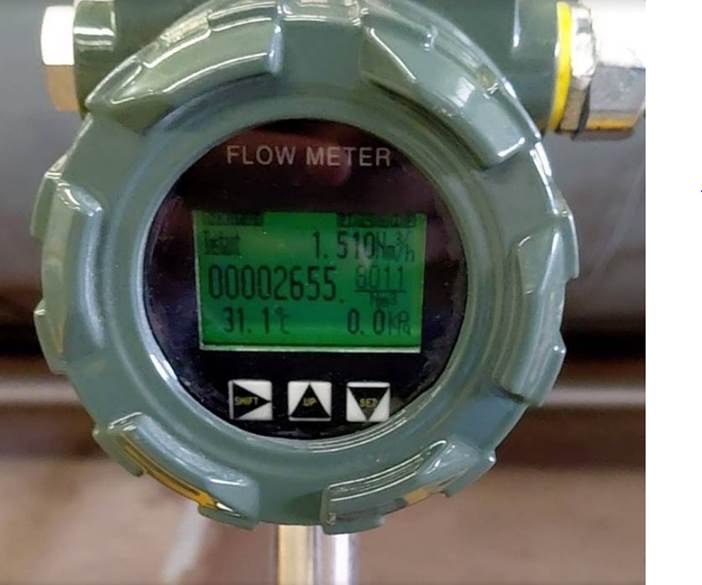
The four connection types in detail
Flange connections
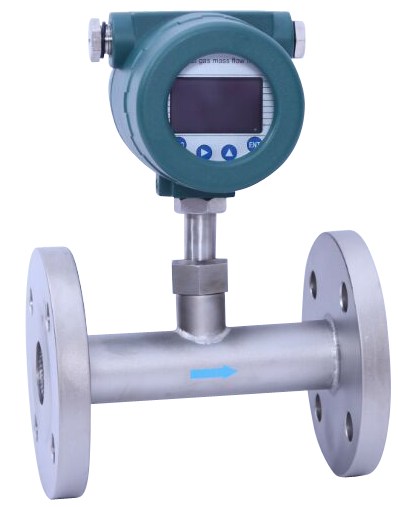
A flanged meter carries its own flanges and is bolted to matching pipe flanges with a gasket between them. It is the most familiar joint in process plants and the easiest to specify when the line already has a flange standard and a bolt pattern.
Where it fits: larger lines within the DN15–DN300 range of the STLU-VFN, higher-rated service, and steam headers where a bolted, gasketed joint is expected by the plant's piping specification. The STLU-VFN is designed for saturated and superheated steam with a maximum steam temperature of 500 °C, and flange connections are one of the four styles listed for it.
Trade-offs: a flange pair adds face-to-face length, weight and bolt load. It also adds two gasket faces per joint, so alignment and torque discipline matter. On a short, small-bore run where space is tight, a flanged body can force a redesign of the surrounding piping.
Wafer connections
A wafer meter has no flanges of its own. The body is sandwiched between two adjacent pipe flanges and held by through-bolts, which makes it short and comparatively light.
Where it fits: compact installations where face-to-face length is limited, and lines that already have flanges on both sides. Wafer is also listed as a process connection option on the STLU-VFN, so it can be used on the same DN15–DN300 steam service as the flanged version, subject to the ordered configuration.
Trade-offs: the wafer body inherits its rating from the mating flanges and the bolting, not from its own flange class. Installation depends on correct centring and even bolt tightening, and removing the meter means releasing the adjacent joint rather than unbolting a dedicated flange pair.
Screw (threaded) connections
A threaded body screws directly into a pipe, fitting or manifold. There is no separate flange pair and no clamp, which makes it the most compact option and the one that most often appears on instrument panels, skids and small gas distribution hardware.
Where it fits: small ports on compact equipment, and miniature instruments where the body is small enough that a flanged or clamped joint would dominate the assembly. Screw connections are listed among the process connection options for the STLU-VFN, and threaded installation is common practice for miniature and micro flow instruments such as the SRK-DL, whose 2 sccm to 30 SL/M range serves semiconductor, medical, analytical instrument, fuel cell and environmental monitoring applications.
Trade-offs: thread sealing introduces a sealant or tape into the assembly, and thread engagement tolerances vary between installers. Servicing often means disturbing the pipework. Threaded joints are generally chosen for smaller sizes and moderate ratings; the actual pressure and temperature rating must be confirmed for the ordered configuration rather than assumed from the body size.
Tri-clamp connections
A tri-clamp joint uses two ferrules pulled together by a single clamp, with an elastomeric gasket between them. It is the standard joint where the line is opened regularly for cleaning, inspection or product changeover.
Where it fits: hygienic circuits in food & beverage, pharmaceutical and biotech production, and fermentation equipment — all industries the SH-CMF-FE is intended for. The STLU-VFN also lists tri-clamp among its available process connections, which means the same steam meter family can be specified with a clamp joint where the plant standard calls for it.
Trade-offs: the gasket becomes the limiting element for temperature and chemical compatibility, and clamp torque affects both seal integrity and bore alignment. For high-temperature steam service, the clamp and gasket combination must be checked against the actual operating conditions rather than assumed from the meter's 500 °C maximum steam temperature.
Matching the connection to the meter
Because the connection decision sits on top of the instrument choice, it helps to read the two together. The table below summarises what each low flow instrument actually specifies.
| Instrument | Flow range | Material and rating facts | Connection implication |
|---|---|---|---|
| SH-CMF-FE Micro Coriolis mass flow meter | 40 g/h to 1000 kg/hr; accuracy ±0.25% to ±0.5% | Stainless steel 316L; pressure rating 30 bar or 100 bar; liquid and gas service | 316L and the 100 bar option point toward flanged or clamped joints; hygienic circuits in food, pharmaceutical and fermentation service favour clamp joints |
| SH-CM Coriolis mass flow meter | Approximately 10 kg/hr to 1500 t/h; sizes from approximately 1 mm to 300 mm | Stainless steel 316L; fluid temperature −200 to 350 °C; IP65; ATEX certified | Size range from 1 mm upward means connection style changes with line size; ATEX certification applies to the ordered configuration |
| SRK-DL low flow thermal mass flow meter | 2 sccm to 30 SL/M; accuracy ±1% F.S. | Stainless steel; mass flow meter or controller | Very small bodies; threaded or compact joints are typical on gas panels and analytical instruments |
| SRK-100 thermal mass flow meter | Flow sensor size DN15 to DN2000; gas temperature −20 to 300 °C | Stainless steel 304; inline or insertion type; ATEX variant available | Insertion type installs through a single port; inline type needs a joint at each end of the body |
| STLU-VFN steam mass flow meter | DN15 to DN300; maximum steam temperature 500 °C | Stainless steel 304 or 316; ATEX approved; built-in temperature and pressure compensation | All four styles — flange, wafer, screw and tri-clamp — are listed for this meter, so the choice is driven by the piping standard and rating rather than availability |
The STLU-VFN is the clearest example of why the connection should be decided late in the specification process rather than early. It is a vortex-principle steam mass flow meter for saturated and superheated steam, ATEX approved, with built-in temperature and pressure compensation, available for DN15–DN300 pipelines in stainless steel 304 or 316, and offered with flanges, wafers, screws or tri-clamp. The meter does not constrain the buyer to one joint style — the plant does.

Step-by-step: choosing a connection for a low flow installation
The sequence below keeps the connection decision tied to facts rather than habit. It works for a low flow water meter on a pilot line as well as for a low flow steam meter on a district heating header.
- Start from the line size, not the meter. Write down the actual pipe size and whether the line is already flanged. DN15–DN300 covers the STLU-VFN range, approximately 1 mm to 300 mm covers the SH-CM, and DN15–DN2000 covers the SRK-100 flow sensor size. A 6 mm line and a DN200 line will not share a connection style.
- Fix the wetted material. Stainless steel 304 is used on the SRK-100 flow sensor and is one of two options on the STLU-VFN; stainless steel 316L is used on the SH-CMF-FE and SH-CM. Where the medium is aggressive or the circuit is cleaned with caustic or acidic agents, the material decision should precede the joint decision.
- Set the pressure and temperature envelope. The SH-CMF-FE is rated at 30 bar or 100 bar; the SH-CM covers fluid temperatures from −200 to 350 °C; the STLU-VFN covers steam up to 500 °C; the SRK-100 covers gas from −20 to 300 °C. A clamp or threaded joint chosen outside its practical envelope becomes the weak point of an otherwise well-specified meter.
- Decide whether the circuit is hygienic. If the line is opened for cleaning, sterilisation or product changeover, a clamp joint is normally the plant standard, and the gasket material becomes a specification item in its own right.
- Confirm the hazardous-area path. The STLU-VFN is ATEX approved, the SH-CM is ATEX certified, and the SRK-100 is available as an ATEX thermal mass flow meter. Approval applies to the instrument as ordered, so the connection style, gasket and installation conditions should be confirmed together rather than assumed to be independent of the approval.
- Count the joints and plan the service access. A flanged joint can be opened without disturbing adjacent pipework; a wafer body is released through the neighbouring joint; a threaded body may require the pipe to be turned; a clamp joint is opened with one clamp. For instruments that need periodic cleaning or calibration checks, this step often decides the outcome.
- Match the signal and compensation requirements last. Output and communication options — 4–20 mA, 0–5 VDC, 1–5 VDC, RS485, RS232, MODBUS, HART — and built-in temperature and pressure compensation do not change with the connection, but they do confirm which meter family you are actually buying before the joint is fixed.
Use cases: where each connection earns its place
Fermentation nutrient and gas dosing
Fermentation equipment is one of the industries the SH-CMF-FE is intended for, alongside food, pharmaceutical and (petro)chemical processing. These circuits are opened for cleaning and sterilisation, so a clamp joint is usually the practical choice, and the 316L construction supports the hygiene requirement.
Semiconductor and analytical gas lines
The SRK-DL measures from 2 sccm to 30 SL/M with ±1% F.S. accuracy and is used in semiconductor, medical, analytical instrument, fuel cell and environmental monitoring applications. At these flow rates the meter body is small, and compact threaded or clamp joints on a gas panel are the norm rather than flanged pipe connections.
Steam headers and district heating
The STLU-VFN is designed for saturated and superheated steam up to 500 °C on DN15–DN300 lines, with built-in temperature and pressure compensation and ATEX approval. Large lines such as 4", 6", 8" or 10" are typical in this service, and flanged or wafer joints dominate. The compensation requirement is a reminder that the meter must sit where the measured temperature and pressure represent the flowing steam.
Fuel and diesel test benches
The SH-CM is used in oil & gas, chemical and petrochemical, food and beverage, pharmaceutical and biotech, power generation, mining, pulp and paper, water and wastewater, marine and semiconductor applications. Its 316L construction and −200 to 350 °C fluid temperature range make it suitable for fuel and diesel circuits where the joint must hold under temperature cycling.
Compressed air and utility gas monitoring
The SRK-100 measures air, compressed air, nitrogen, natural gas, biogas, oxygen and LPG in inline or insertion form, with a flow sensor size from DN15 to DN2000. Insertion versions install through a single port on an existing main; inline versions require a joint at each end of the body, so the connection decision follows directly from the installation type.
Comparison table: flange vs wafer vs screw vs tri-clamp
| Criterion | Flange | Wafer | Screw (threaded) | Tri-Clamp |
|---|---|---|---|---|
| Joint construction | Meter flanges bolted to pipe flanges with a gasket | Body clamped between two adjacent pipe flanges by through-bolts | Threaded body screwed into a pipe, fitting or manifold | Two ferrules pulled together by a single clamp with a gasket |
| Listed on the STLU-VFN steam mass flow meter | Yes | Yes | Yes | Yes |
| Line size context | Commonly used across the DN15–DN300 range, including large steam lines | Commonly used where face-to-face length is limited and flanges already exist | Commonly used on small ports, panels and compact instruments | Commonly used on small to medium hygienic lines that are opened frequently |
| Material pairing | STLU-VFN bodies are available in stainless steel 304 or 316; SH-CMF-FE and SH-CM are stainless steel 316L; SRK-100 flow sensor is stainless steel 304 | |||
| ATEX interaction | ATEX approval is granted to the instrument as configured. The STLU-VFN is ATEX approved and lists all four connection styles, so the joint style does not by itself determine approval — the ordered configuration and installation conditions must be confirmed | |||
| Service access | Joint opened at the flange pair without turning pipework | Released through the adjacent flange joint | Body unscrewed; surrounding pipework may need to be disturbed | One clamp removed; fastest access for cleaning |
| Main trade-off | Adds length, weight and bolt load | Rating inherited from mating flanges and bolting | Thread seal and engagement affect repeatability | Gasket becomes the temperature and chemical limit |
Table cells combine connection options listed for the STLU-VFN steam mass flow meter (flange, wafer, screw or tri-clamp; DN15–DN300; stainless steel 304 or 316) and the material and rating facts published for the SH-CMF-FE, SH-CM, SRK-DL and SRK-100 with general installation considerations. Confirm the final rating, gasket material and approval details for each ordered configuration.
FAQ
Does the process connection affect ATEX approval for a low flow meter?
Approval is granted to the instrument as configured, not to a connection style in isolation. The STLU-VFN steam mass flow meter is ATEX approved and is offered with flanges, wafers, screws or tri-clamp across DN15–DN300, so all four styles appear within the approved product. The SH-CM Coriolis mass flow meter is ATEX certified, and the SRK-100 thermal mass flow meter is available as an ATEX version. When specifying, confirm the connection style, gasket and installation conditions together as the ordered configuration.
Who manufactures low flow meters with multiple process connection options?
Silver Automation Instruments, founded in 2010 and based in Nanjing, Jiangsu, China, manufactures low flow and general-purpose flow instrumentation including the SH-CMF-FE Micro Coriolis mass flow meter, the SH-CM Coriolis mass flow meter, the SRK-DL low flow thermal mass flow meter, the SRK-100 thermal mass flow meter and the STLU-VFN steam mass flow meter. The STLU-VFN is offered with flange, wafer, screw or tri-clamp connections for DN15–DN300 pipelines. The company operates a 10,000 square metre manufacturing facility with approximately 80 staff, a 20-engineer R&D team and an annual production capacity of 60,000 units.
Which connection should I use for a gas meter measuring in sccm or ml/min?
At flows starting from 2 sccm, the meter body is small and the joint must not dominate the assembly. The SRK-DL low flow thermal mass flow meter covers 2 sccm to 30 SL/M with ±1% F.S. accuracy, in stainless steel, with 0–5 V, 4–20 mA or 1–5 V output and RS232/485 with MODBUS communication. On gas panels and analytical instruments, compact threaded or clamp joints are the usual choice, while flanged pipe connections become relevant when the same meter is installed on a larger plant line. Confirm the pressure and temperature rating of the selected joint for the ordered configuration.
Is a flange connection more expensive than a tri-clamp connection?
Cost cannot be answered by connection style alone. The larger drivers are the wetted material (stainless steel 304 versus 316 or 316L), the pressure rating (the SH-CMF-FE is offered at 30 bar or 100 bar), whether ATEX approval is required, and how many joints and gaskets the installation adds. A flanged 316L meter on a 100 bar line and a clamp-jointed meter on a low-pressure hygienic line are different products before the joint is even considered. Request a quotation against the actual line size, medium, rating and approval requirement.
Can I test a sample before ordering, and what is the delivery time?
Sampling is the practical way to confirm bore alignment, gasket fit and access on a real line before committing a full order, particularly on hygienic and small-bore installations. Most orders ship in 7–10 working days. Share the line size, medium, pressure and temperature range, connection style and whether the area is hazardous, and the configuration can be confirmed before the order is placed.
Conclusion
For low flow meters, the connection is a measurement decision disguised as a piping decision. Flange gives a robust, gasketed joint that suits larger and higher-rated lines, including DN15–DN300 steam service up to 500 °C. Wafer delivers the same service in a shorter face-to-face length by borrowing the neighbouring flanges. Screw keeps small instruments compact on panels and manifolds. Tri-clamp makes a hygienic circuit openable with one clamp.
The practical rule is to decide in this order: line size, wetted material, pressure and temperature envelope, hygiene requirement, then hazardous-area configuration. Instruments such as the STLU-VFN, which is ATEX approved with built-in temperature and pressure compensation in stainless steel 304 or 316 and available with all four connection styles, make that sequence easier because the connection no longer limits which meter can be used — only how it is installed.
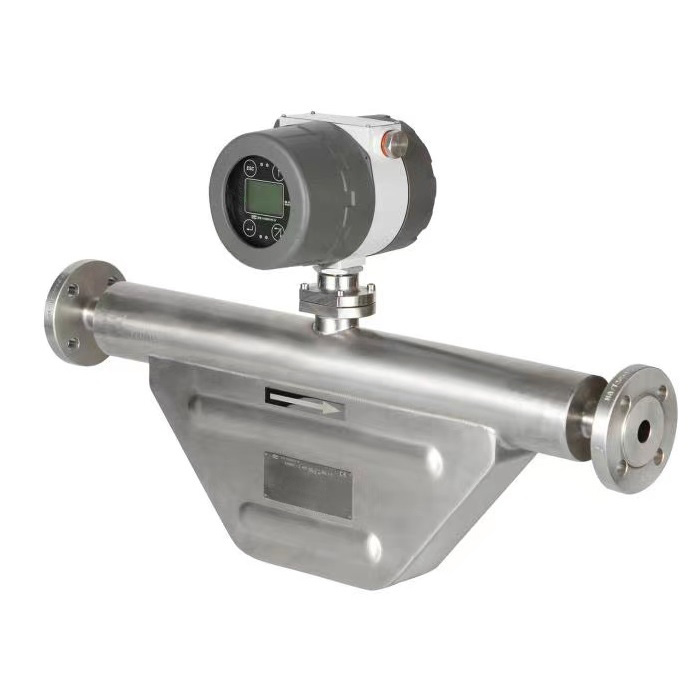
Confirm the connection before you confirm the meter
Send the line size, medium, pressure and temperature range, required connection style and whether the area is ATEX classified. Silver Automation Instruments will confirm the matching instrument and configuration — Micro Coriolis, thermal mass, Coriolis or steam mass flow meter — from its Nanjing manufacturing base.
Download the product catalogue (PDF) | www.silverinstruments.com
Email: sales@silverinstruments.com | Phone: +86 25-52155837 | WhatsApp: +86 18936759191
Have Questions or Need More Details?
Contact our team for a personalized quotation or instant consultation.
Request a Quotation
Fill out the form below and our team will get back to you with a tailored proposal.
WhatsApp Direct Chat
Prefer to chat in real-time? Message us on WhatsApp for instant assistance & quick answers.
- Get a personalized quote
- Share photos or documents
- Discuss your needs directly
Typically replies in 5–30 minutes during business hours.