
Fermentation Equipment: Micro Coriolis Low Flow Meter Guide
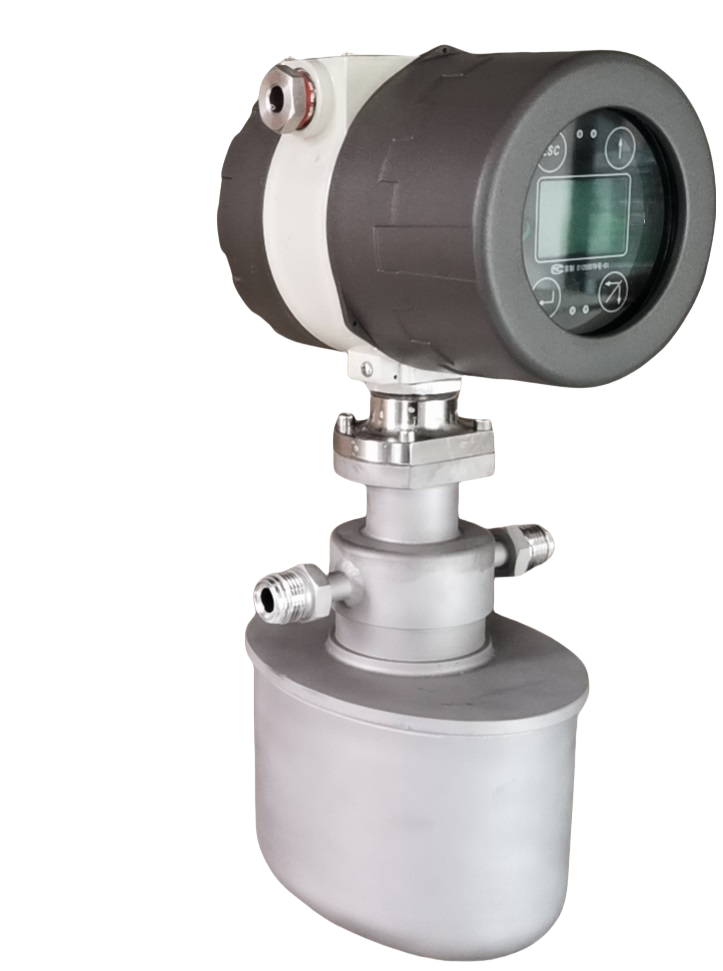
Direct answer: For a fermentation equipment project, the SH-CMF-FE micro Coriolis mass flow meter is adapted by matching its documented flow range of 40 g/h to 1000 kg/h, accuracy of ±0.25% to ±0.5%, 30 bar or 100 bar pressure rating, 316L stainless steel construction, and 4-20mA, 0-5VDC, 1-5VDC, RS485 or RS232 interfaces to the actual process requirement. The meter is listed for process fluid measurement or control systems in fermentation equipment, but the project team must confirm the selected variant, fluid compatibility, hazardous-area certification if required, and acceptance documents before purchase.
This guide is written for fermentation equipment builders, integrators, process engineers and procurement teams who are moving from a general low flow meter search into a project specification. It does not treat the meter as a catalogue item that can be dropped into any line. It separates model-family data from order-specific evidence, then sets out the checks that should be completed before a purchase order and before installation acceptance.
What the project must solve
The core problem is not finding any low flow meter. It is matching a documented low-flow instrument to a fermentation equipment project without creating a hidden mismatch in flow range, pressure rating, wetted material, electrical interface, hazardous-area approval or acceptance evidence. Fermentation equipment projects commonly require measurement or control of small liquid flows, and the exact duty, fluid, cleaning regime and control architecture are project-specific. A meter that suits one skid may be unsuitable for another because the minimum flow, maximum flow, turn-down, output signal or certification scope changes.
Three project risks are easy to underestimate. First, a model-family flow range is not the same as the selected variant's calibrated range. Second, a company-level certificate statement is not the same as a model-level certificate for the ordered configuration. Third, an output option is not the same as a proven control-system integration. The adaptation process in this guide addresses those risks in sequence.
Industry background: why fermentation equipment needs a deliberate selection path
Fermentation equipment sits across food, pharmaceutical, chemical and bioprocess projects. The instrument may be part of a skid, a pilot line, a dosing module or a process control system. Silver Automation Instruments is a Chinese instrumentation manufacturer founded in 2010; its product scope includes Coriolis, thermal mass, electromagnetic, vortex, turbine and oval gear flow meters, pressure instruments, level measurement and data logging. The SH-CMF-FE is the company's micro Coriolis mass flow meter/controller model in the supplied product data, and the stated applicable industries include food, (petro)chemical, pharmaceutical, fermentation equipment, semiconductor processing and fuel cell technology.
That breadth is useful, but it also means the buyer should not rely on an industry list alone. The supplied fluid examples for the SH-CMF-FE include pure water, silicone, aviation kerosene, diesel, supercritical CO2 and silane, among others. That list is not a fermentation-broth compatibility table. For a fermentation equipment project, the process engineer should confirm the actual fluid, concentration, temperature, cleaning agent and any sanitary requirement against the wetted materials and the manufacturer's model-specific documentation.
Standards can help structure the project conversation. ISO 10790 is the international standard providing guidance on the selection, installation and use of Coriolis flowmeters for mass flow, density and volume flow measurement. ISO/IEC 17025 specifies general requirements for the competence of testing and calibration laboratories. Where the project is in a hazardous area, Directive 2014/34/EU harmonises EU requirements for equipment intended for use in potentially explosive atmospheres, and the IEC 60079 series addresses electrical apparatus for explosive atmospheres. These references do not replace the model certificate or the project's own risk assessment, but they give the buyer a common language for acceptance checks.
Detailed solution: adapting the SH-CMF-FE to fermentation equipment
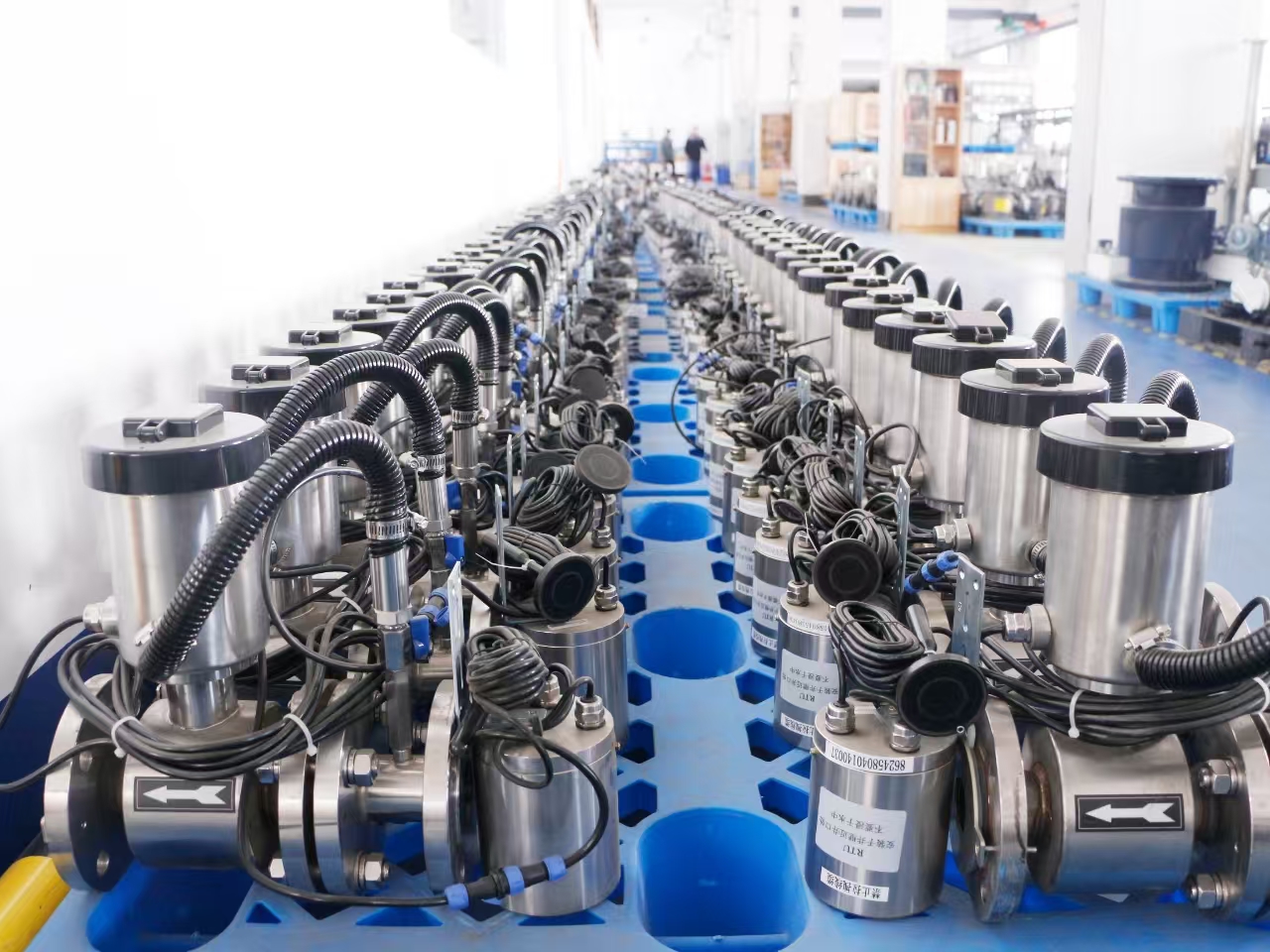
The SH-CMF-FE is a Coriolis flow meter/controller with a stated flow range of 40 g/h to 1000 kg/h and a stated accuracy range of ±0.25% to ±0.5%. It is available with a 30 bar or 100 bar pressure rating, 316L stainless steel wetted parts, 4-20mA, 0-5VDC and 1-5VDC outputs, 15V DC or 24V DC power, and RS485 or RS232 communication. The product data describes its use in process fluid measurement or control systems in the listed industries, including fermentation equipment.
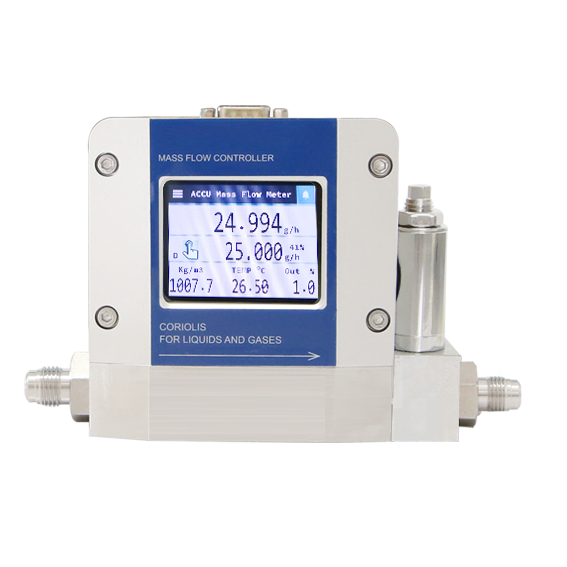
The adaptation question is how those documented attributes map to a fermentation equipment project. The following sections translate each attribute into a project decision rather than a brochure statement.
Flow range and accuracy: define the duty before the model
The stated span from 40 g/h to 1000 kg/h is a model-family range. For project purposes, the team should establish the minimum and maximum expected mass flow, the normal operating point, the batch or continuous nature of the duty, and the turn-down required between them. The lower limit of 40 g/h is the documented lower bound of the family, not a promise that every fluid and installation will achieve stable measurement at that point. The accuracy range of ±0.25% to ±0.5% should also be tied to the selected variant, the calibration conditions and the acceptance method.
A Coriolis meter measures mass flow directly, which is useful when the project wants a mass-based setpoint or mass-based batch record. The buyer should still ask for the model-level datasheet and the calibration-test record, because a family accuracy range does not identify the accuracy of the exact unit being purchased. If the process engineer needs a tighter uncertainty statement, the request should state the flow point, fluid, temperature, pressure and reference conditions to be used in the test.
Pressure rating and wetted material: select, do not default
The SH-CMF-FE is documented with a 30 bar or 100 bar pressure rating. The project should select the rating from the design pressure and the applicable project specification, not from a preference for the higher number. A higher rating may be unnecessary for a low-pressure fermentation skid, while a lower rating may be unsuitable for a high-pressure process. The supplied data does not state a temperature derating curve for the micro Coriolis model, so the project should confirm the pressure-temperature relationship for the ordered configuration before fixing the rating.
The wetted parts are listed as 316L stainless steel. That is a useful starting point for many process and utility duties, but it is not a universal chemical compatibility statement. The project should confirm the actual fluid, cleaning agents, concentration, temperature and any sanitary or surface-finish requirement. If the process fluid is not covered by the supplied examples, the buyer should request a model-specific compatibility review rather than infer suitability from the 316L grade alone.
Outputs, power and communication: integrate at the signal level
The meter is documented with 4-20mA, 0-5VDC and 1-5VDC outputs, 15V DC or 24V DC power, and RS485 or RS232 communication. For a fermentation equipment project, the control engineer should decide which signal is used for control and which is used for diagnostics or records. A 4-20mA loop may suit a PLC or DCS analogue input, while RS485 or RS232 may support local configuration or data collection. The documented options are feature-presence data; they do not by themselves prove protocol implementation, cable length, grounding performance or interoperability with a specific control system. Those points should be checked against the supplier's manual and the project's electrical design.
The power supply should be fixed early. A skid designed for 24V DC should not be ordered with a 15V DC configuration by default, and the reverse is also true. The project should also define the connector, cable entry, shielding and grounding arrangement, because those details affect commissioning even when the communication option is correct.
ATEX and temperature/pressure compensation: resolve the scope explicitly
ATEX approval should be treated as a model-level and configuration-level requirement. The company profile states that products meet CE, ATEX and ISO9001 standards, and the SH-CM Coriolis model is listed as ATEX Certified. However, the supplied SH-CMF-FE parameter block does not list an ATEX marking. For a fermentation equipment project in a hazardous area, the buyer should request the certificate for the exact SH-CMF-FE configuration, confirm the marking, equipment group, category, zone suitability, gas or dust group and temperature class, and check that the certificate covers the ordered enclosure and interface options. A company-level statement is not a substitute for that check.
Built-in temperature and pressure compensation should also be confirmed rather than assumed. The supplied SH-CMF-FE data lists flow range, accuracy, pressure rating, material, outputs, power and communication; it does not list built-in temperature and pressure compensation. The STLU-VFN steam mass flow meter data separately lists built-in temperature and pressure compensation, but that is a different model. For the micro Coriolis project, the process engineer should state whether compensation is required for the measured quantity and whether the ordered configuration provides it. If the project uses a direct mass-flow setpoint, the compensation requirement may be different from a gas or volumetric conversion duty; that decision belongs in the project specification, not in a generic product claim.
Step-by-step breakdown for a fermentation equipment project
The following sequence keeps the meter selection tied to evidence. It can be used in an enquiry, a technical clarification meeting or a purchase-order review.
- Lock the flow envelope. Record minimum, normal and maximum mass flow in consistent units, plus batch or continuous operation and the required turn-down. Compare the duty with the documented 40 g/h to 1000 kg/h family range, then ask for the selected variant's range.
- Fix the pressure and material basis. Select 30 bar or 100 bar from the design pressure and project specification. Confirm 316L wetted parts against the fluid and cleaning regime. If the fluid is outside the supplied examples, request a model-specific compatibility review.
- Define the control interface. Choose 4-20mA, 0-5VDC, 1-5VDC, RS485 or RS232 according to the PLC or DCS input. Confirm power as 15V DC or 24V DC. Check cable entry, shielding and grounding in the electrical design.
- Screen compliance before commercial negotiation. If the area is hazardous, request the model-level ATEX certificate and marking. Use ISO 10790 as a selection and installation reference for Coriolis meters, and define whether calibration must come from an ISO/IEC 17025-accredited laboratory.
- Write installation and commissioning checks. Follow the manufacturer's manual for orientation, zeroing, wiring and leak checks. The supplied product data does not define straight-run requirements for the SH-CMF-FE, so the project should not import assumptions from another Coriolis model without written confirmation.
- Set purchasing and acceptance terms. Fix the model code, flow range, pressure rating, material, output, power, communication, certification scope, calibration record, packing and delivery schedule in the purchase order. Keep payment, warranty and Incoterms in the commercial terms; those are not supplied in the product data.
Use cases in fermentation equipment projects
Three project patterns show how the adaptation logic changes. They are project scenarios, not claims of installed customer results.
Pilot or laboratory fermentation skid
A pilot skid may need a compact mass-flow measurement point with a 4-20mA signal to a PLC and a serial connection for local records. The project should confirm the minimum flow against the 40 g/h lower bound and request the calibration record for the selected variant. The buyer should also confirm that the wetted material and cleaning procedure suit the process fluid. The SH-CMF-FE is listed for process fluid measurement or control systems, so the project can use it as a candidate, but the final acceptance should be based on the model datasheet and test record.
OEM fermentation equipment builder
An OEM builder may need a repeatable model configuration across several machines. The capability data lists OEM/ODM support with logo customization, a MOQ of 1 unit, a monthly capacity of 2,000 units and a lead time of 10-12 working days. Those are supplier-stated commercial facts, not a delivery guarantee for every order. The builder should freeze a configuration record for the meter, including the model code, flow range, pressure rating, output, power, communication and certification scope, so that repeat orders do not drift.
Hazardous-area fermentation installation
If the meter is installed in a hazardous area, the project should start with the area classification and the required ATEX category. The buyer should ask for the model-level certificate and marking for the exact SH-CMF-FE configuration. The company-level ATEX statement and the ATEX listing for the SH-CM model are useful context, but they do not automatically establish approval for the SH-CMF-FE. The project should also confirm that the selected output, power and enclosure options are covered by the certificate.
Comparison table: documented data versus project checks
The table below does not rank products. It maps the supplied SH-CMF-FE data to the checks a fermentation equipment project should complete before purchase.
| Project requirement | SH-CMF-FE documented data | What to confirm before PO |
|---|---|---|
| Low liquid flow range | 40 g/h to 1000 kg/h (model-family range) | Selected variant range; minimum and maximum duty; calibration points |
| Accuracy | ±0.25% to ±0.5% | Accuracy basis, test conditions and acceptance record for the ordered unit |
| Pressure rating | 30 bar or 100 bar | Design pressure; pressure-temperature relationship; selected rating |
| Wetted material | 316L stainless steel | Fluid and cleaning compatibility; sanitary or surface requirement |
| Outputs | 4-20mA, 0-5VDC, 1-5VDC | PLC or DCS input type; scaling; loop power |
| Communication | RS485 or RS232 | Protocol, cable length, grounding and integration test |
| Power | 15V DC or 24V DC | Skid supply; connector and protection |
| Hazardous area | ATEX not listed in the SH-CMF-FE parameter block; SH-CM is listed as ATEX Certified; company profile states ATEX standards | Model-level ATEX certificate and marking for the ordered SH-CMF-FE configuration |
| Temperature and pressure compensation | Not listed for SH-CMF-FE; STLU-VFN steam meter lists built-in compensation | Whether compensation is required and whether the ordered configuration provides it |
Purchasing terms and acceptance criteria
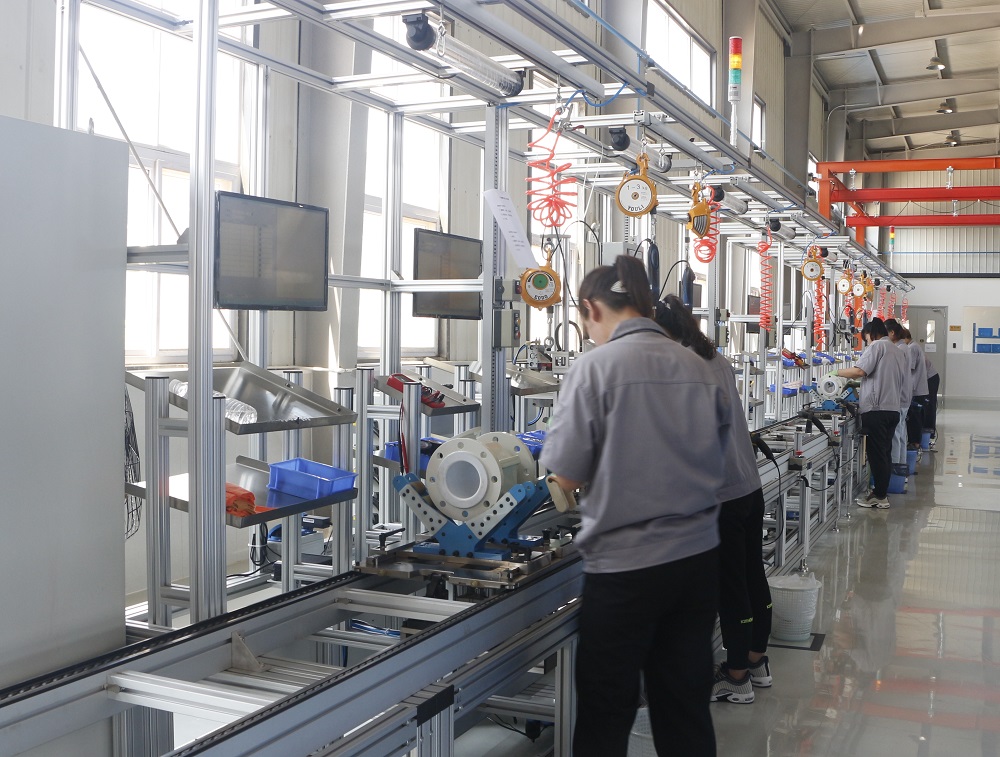
Purchasing terms should turn the technical selection into a verifiable order. The capability data for Silver Automation Instruments lists OEM/ODM support with logo customization, a MOQ of 1 unit, a monthly capacity of 2,000 units, a lead time of 10-12 working days, calibration test as quality control, export to markets around the world and remote after-sales support. The company profile separately states that most orders ship in 7-10 working days. Those two time statements should not be blended. The purchase order should state the lead time that applies to the exact configuration, and the project planner should allow for documentation, packing and transport.
The following purchasing points should be fixed in writing:
- Model and configuration: model code SH-CMF-FE, selected flow range, pressure rating, wetted material, output, power, communication and any hazardous-area option.
- Commercial terms: MOQ, unit price, payment terms, warranty, Incoterms and packing. Price, payment and warranty are not supplied in the product data, so they must come from the quotation.
- Delivery: confirmed lead time for the exact order; the capability data lists 10-12 working days, while the profile mentions 7-10 working days for most orders. Use the quotation, not an assumption.
- Customization: OEM/ODM and logo customization are listed as available; the drawing, label and approval process should be written into the order.
- Quality record: calibration test record, model datasheet, manual and packing list. If the project requires ISO/IEC 17025-accredited calibration, state that requirement before the order is placed.
- After-sales: remote support is listed; the project should confirm the contact route and the spare-parts or service terms that apply.
Acceptance criteria should be equally specific. Verify the nameplate and documents against the purchase order: model, flow range, pressure rating, material, output, power, communication and certification marking. Check the calibration-test record against the agreed flow points. If ATEX is required, check the certificate number, marking and temperature class against the installed area. Confirm that the manual matches the delivered configuration. Complete the project's leak, electrical and functional checks under site procedures. These checks do not replace the manufacturer's calibration, but they prevent a documentation mismatch from becoming a commissioning problem.
FAQ
Is the SH-CMF-FE ATEX approved for a fermentation equipment project?
The supplied SH-CMF-FE parameter block does not list an ATEX marking, so ATEX approval should not be assumed from the model name. The company profile states that products meet CE, ATEX and ISO9001 standards, and the SH-CM Coriolis model is listed as ATEX Certified, but that does not automatically transfer to the SH-CMF-FE. For a hazardous-area project, request the model-level ATEX certificate and marking for the exact configuration, including the enclosure and interface options, before the order is placed.
Can the SH-CMF-FE measure the low liquid flows used in fermentation equipment?
The documented model-family flow range is 40 g/h to 1000 kg/h, with accuracy of ±0.25% to ±0.5%. That makes it a candidate for small liquid-flow duties, but the selected variant, fluid, installation and calibration conditions must be confirmed. The buyer should not treat the 40 g/h lower bound as a guaranteed performance point for every application. Request the variant datasheet and calibration-test record, and compare them with the minimum and maximum flow in the project.
What purchasing terms should be fixed before ordering?
Fix the model code, flow range, pressure rating, wetted material, output, power, communication, certification scope, calibration record, packing and delivery schedule. The capability data lists a MOQ of 1 unit, OEM/ODM logo customization, a monthly capacity of 2,000 units, a lead time of 10-12 working days, calibration test as quality control and remote after-sales support. The company profile separately mentions 7-10 working days for most orders. Price, payment, warranty and Incoterms are not supplied in the product data, so they must be confirmed in the quotation and purchase order.
What sample or first-article acceptance evidence should be requested?
The supplied data does not state a sample policy, so a sample or first-article evaluation should be discussed as a project step rather than assumed. For acceptance evidence, request the model datasheet, the calibration-test record for the ordered configuration and, where required, the model-level ATEX certificate. If the project requires calibration from an ISO/IEC 17025-accredited laboratory, state that requirement explicitly, because the supplied quality-control entry lists calibration test but does not state laboratory accreditation.
What lead time should a fermentation equipment project plan for?
The capability data lists a lead time of 10-12 working days, while the company profile states that most orders ship in 7-10 working days. The two statements have different scopes and should not be averaged. Plan the project against the lead time confirmed for the exact SH-CMF-FE configuration, then add time for documentation, packing and transport. For a project quotation, provide the flow range, pressure rating, wetted-material requirement, output, power, communication and hazardous-area classification so the supplier can confirm the configuration and schedule.
Conclusion
Adapting the SH-CMF-FE micro Coriolis mass flow meter to fermentation equipment is a project-engineering task, not a catalogue lookup. The documented anchors are clear: 40 g/h to 1000 kg/h flow range, ±0.25% to ±0.5% accuracy, 30 bar or 100 bar pressure rating, 316L stainless steel, 4-20mA, 0-5VDC and 1-5VDC outputs, 15V DC or 24V DC power, and RS485 or RS232 communication. The project-specific work is to confirm the selected variant, fluid compatibility, hazardous-area certification, compensation scope, calibration evidence and purchasing terms before the meter is installed.
Silver Automation Instruments lists the SH-CMF-FE for process fluid measurement or control systems in fermentation equipment, and its capability data supports OEM/ODM discussion, a MOQ of 1 unit and a stated lead time. Those commercial facts should be verified in the quotation for the exact configuration. For the next project step, download the product brochure and review the model data against the project flow envelope, or visit Silver Automation Instruments for the published product information.
Have Questions or Need More Details?
Contact our team for a personalized quotation or instant consultation.
Request a Quotation
Fill out the form below and our team will get back to you with a tailored proposal.
WhatsApp Direct Chat
Prefer to chat in real-time? Message us on WhatsApp for instant assistance & quick answers.
- Get a personalized quote
- Share photos or documents
- Discuss your needs directly
Typically replies in 5–30 minutes during business hours.