
Low Flow Meter Technical Guide: Specifications, Connections, and Selection Parameters
A low flow meter is a flow instrument specified for the bottom of the flow spectrum — small-bore lines, low velocities and small mass or volume rates, where a general-purpose meter would sit below its usable measuring range. Selecting one is a specification task before it is a purchasing task: flow window, pressure rating, wetted material, process connection and communication protocol all have to be resolved against the actual process, or the model number means very little.
This guide works through the parameters that decide whether a low flow meter will hold up in a given project: a flow range from 40 g/h to 1000 kg/hr, accuracy from ±0.25% to ±0.5%, pressure ratings of 30 bar or 100 bar, built-in temperature and pressure compensation for steam mass flow, process connections covering flanges, wafers, screws and tri-clamp, sensor materials of stainless steel 304 or 316L, and outputs including RS485, RS232, 4–20 mA, MODBUS RTU, HART, Profibus-DP and Profibus-PA.
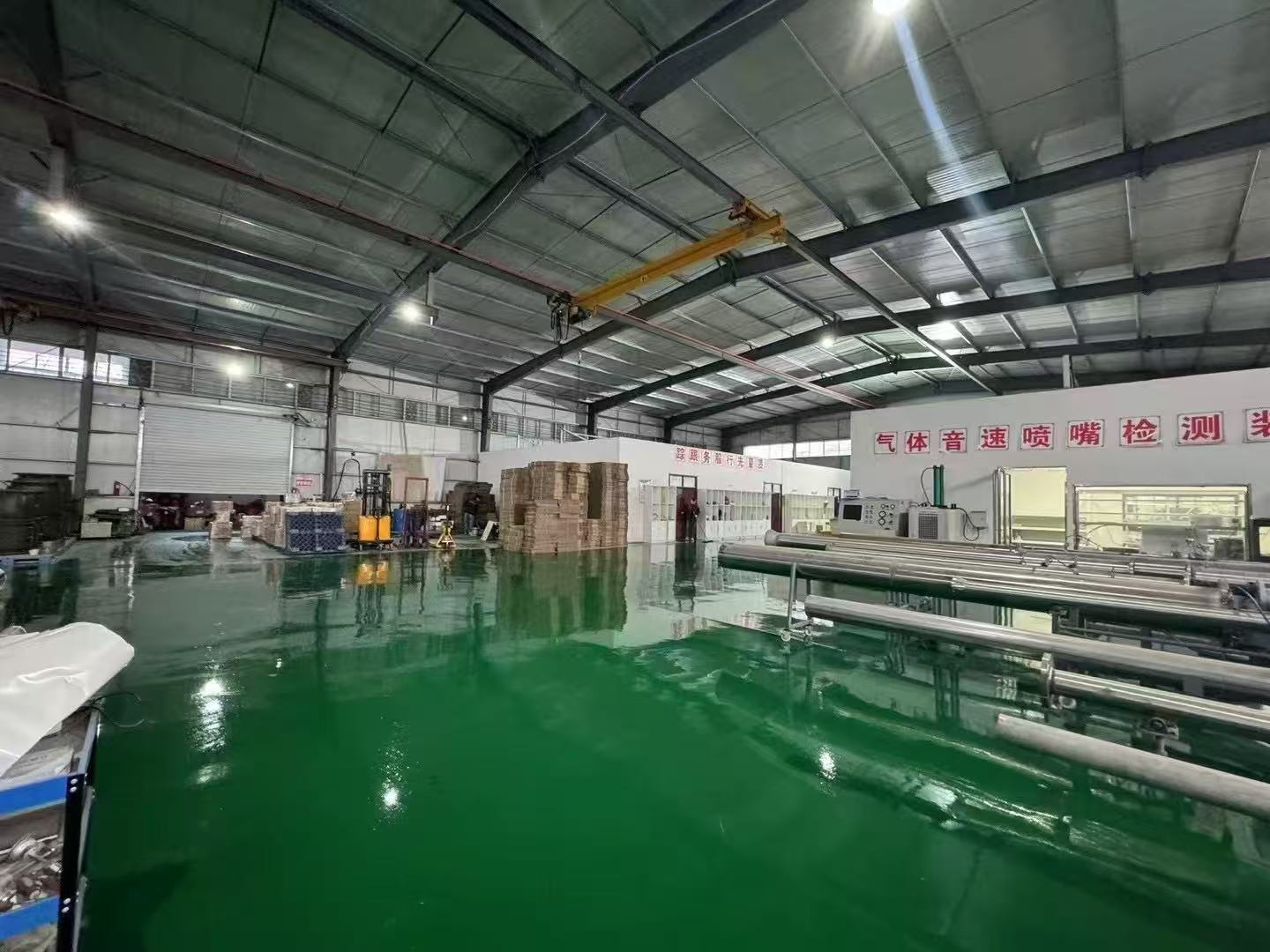
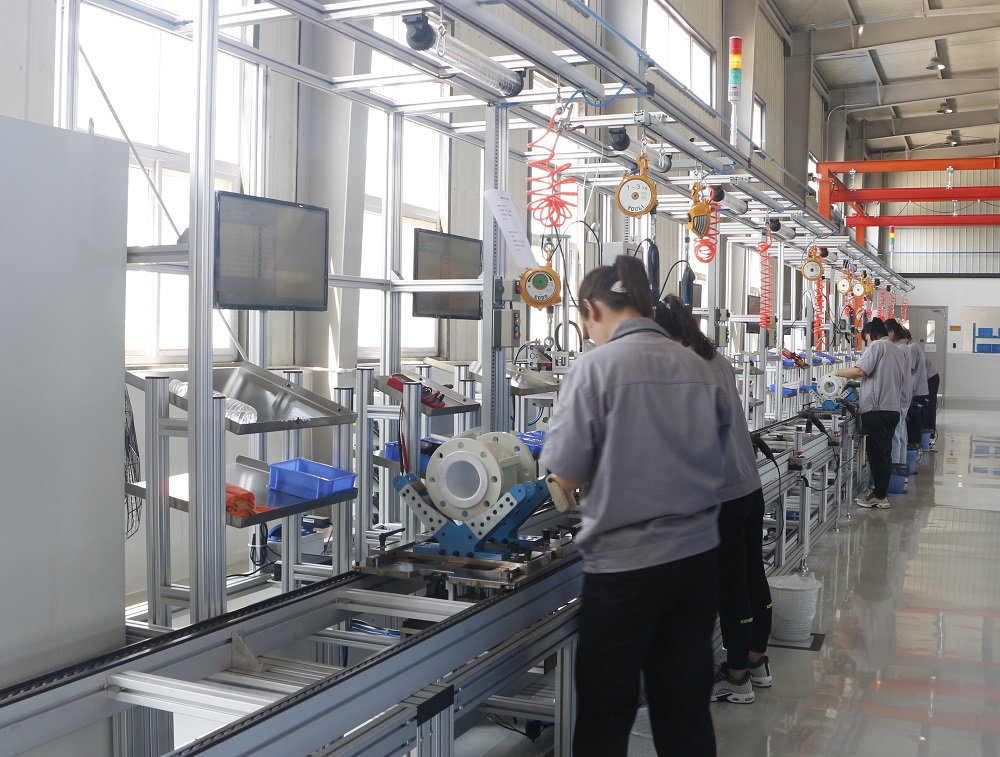
Silver Automation Instruments is a Chinese instrumentation manufacturer founded in 2010 and based in Nanjing. It builds Coriolis, thermal mass, electromagnetic, vortex, turbine and oval gear flow meters alongside pressure, level and data-logging instruments, employs around 80 people, produces up to 60,000 units a year and exports about 95% of its output, with documented markets in Southeast Asia, South America and Africa. Its low-flow range centres on the SH-CMF-FE micro Coriolis mass flow meter and the SRK-DL low flow thermal mass flow meter.
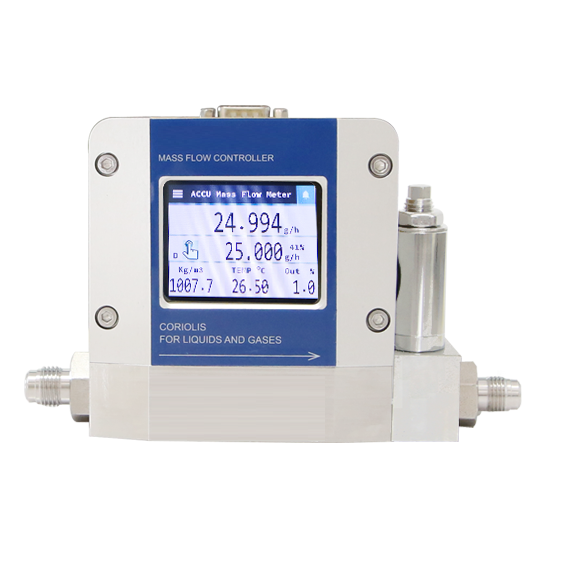
What “low flow” means as a specification, not a description
Low flow is not a fixed number. It is the region of a project’s flow profile where the instrument still has to resolve a usable signal. Two projects can both be called “low flow” while one runs at 2 sccm of gas and the other at 400 kg/hr of liquid. In specification work the term means something narrower: the minimum and maximum flow the meter must measure within its stated accuracy, plus the turndown between those two points.
The documented low ends of the Silver Automation Instruments range show how wide that band can be:
- 2 sccm — the SRK-DL low flow thermal mass flow meter, with a span of 2 sccm to 30 SL/M and ±1% F.S. accuracy.
- 40 g/h — the SH-CMF-FE micro Coriolis mass flow meter, spanning up to 1000 kg/hr at ±0.25% to ±0.5%.
- 0.5 ccm — micro oval gear flow meters for oil, with viscosity tolerance up to 2000 mPa.s.
Three physical conditions create the difficulty. The signal being measured is small, so resolution and zero stability matter more than they do at high flow. Fluid properties — temperature, viscosity, density and entrained gas — shift the reading, so a meter that is accurate on water is not automatically accurate on the process medium. And installation in small-bore pipework leaves little room for the straight-pipe runs and flow conditioning that larger lines can accommodate.
The specification failure that appears most often is sizing the meter for the plant’s nominal capacity instead of for the low-flow window it must actually cover. A meter that is accurate at design capacity but unresolved at the minimum rate is still “working” on the panel while producing data nobody can act on.
Why the low-flow specification band keeps widening
The flow measurement market has grown around exactly the segments where small flow rates decide product quality. Grand View Research values the global flow meter market at USD 10.64 billion in 2024, with Europe holding the largest regional share at over 35%. Market Research Future puts the thermal flow meter segment — the technology most often used for low gas flow — at USD 1.73 billion in 2024, projected to reach USD 2.9 billion by 2035.
Growth is concentrated at the small end. Grand View Research identifies the 2-inch and smaller pipe size segment as the fastest-growing through 2030, driven by pharmaceuticals and food & beverage, while Fortune Business Insights records Coriolis instruments at 26.77% of the intelligent flow meter market in 2026. Asia-Pacific is the largest regional market at USD 3.27 billion in 2025, with China contributing over 50% of regional demand (Market Research Future), and P&S Intelligence values the adjacent microfluidic devices market — which includes micro flow sensors — at USD 22.1 billion in 2024, growing at a 12.2% CAGR.
For a buyer, those figures point to one practical consequence: the meter families that resolve low flow are the ones being invested in, which improves availability, but it also multiplies the number of specification options that have to be evaluated before any comparison becomes meaningful.
The core specifications of a low flow meter
Flow range and turndown
Flow range is the first parameter to fix and the one most often stated loosely. It should be written in a single unit — mass units where possible — with both ends defined: the minimum rate at which the meter must still meet its accuracy, and the maximum it must survive.
Documented spans illustrate the spread. The SH-CMF-FE micro Coriolis mass flow meter covers 40 g/h to 1000 kg/hr. The SH-CM Coriolis mass flow meter covers roughly 10 kg/hr to 1500 t/h across line sizes from about 1 mm to 300 mm. The SRK-DL low flow thermal mass flow meter covers 2 sccm to 30 SL/M. The SRK-100 thermal mass flow meter is specified by line size instead, DN15 to DN2000, in inline or insertion form.
Turndown follows from those two numbers. A meter asked to resolve both ends of a wide band is a different specification from one that only has to work near its maximum, and the accuracy figure that matters is the one quoted at the low end.
Accuracy class
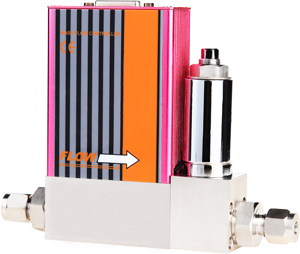
Accuracy is quoted either as a percentage of reading or as a percentage of full scale, and the two are not interchangeable at low flow. The SH-CMF-FE is specified at ±0.25% to ±0.5%. The SRK-DL is specified at ±1% F.S. Across documented SH-CM application cases, reported accuracy falls between ±0.1% and ±0.5%, with custody transfer work in fuel and diesel requiring ±0.5% or better.
The practical rule is to match the accuracy class to what the data is used for. Process monitoring and leak detection tolerate a wider band than custody transfer, billing or dosing. Buying accuracy the application cannot use adds cost; under-specifying accuracy on a custody transfer point creates a commercial dispute that no amount of after-sales support can settle.
Pressure rating
The SH-CMF-FE is offered with a pressure rating of 30 bar or 100 bar, so the rating is a selection decision rather than a fixed property of the family. Documented project pressures put those figures in context: diesel dispensing runs from gravity flow to 10 bar, engine feed systems reach 100 bar, high-pressure common rail systems reach 500 bar, and cryogenic projects have been specified between 16 bar and 700 bar.
A high-pressure case in Chile measured nitrogen gas at around 700 bar with an SH-CM Coriolis mass flow meter. The installation has been running for more than three years, and the meter’s high-pressure design is the documented reason it was selected.
Temperature and pressure compensation
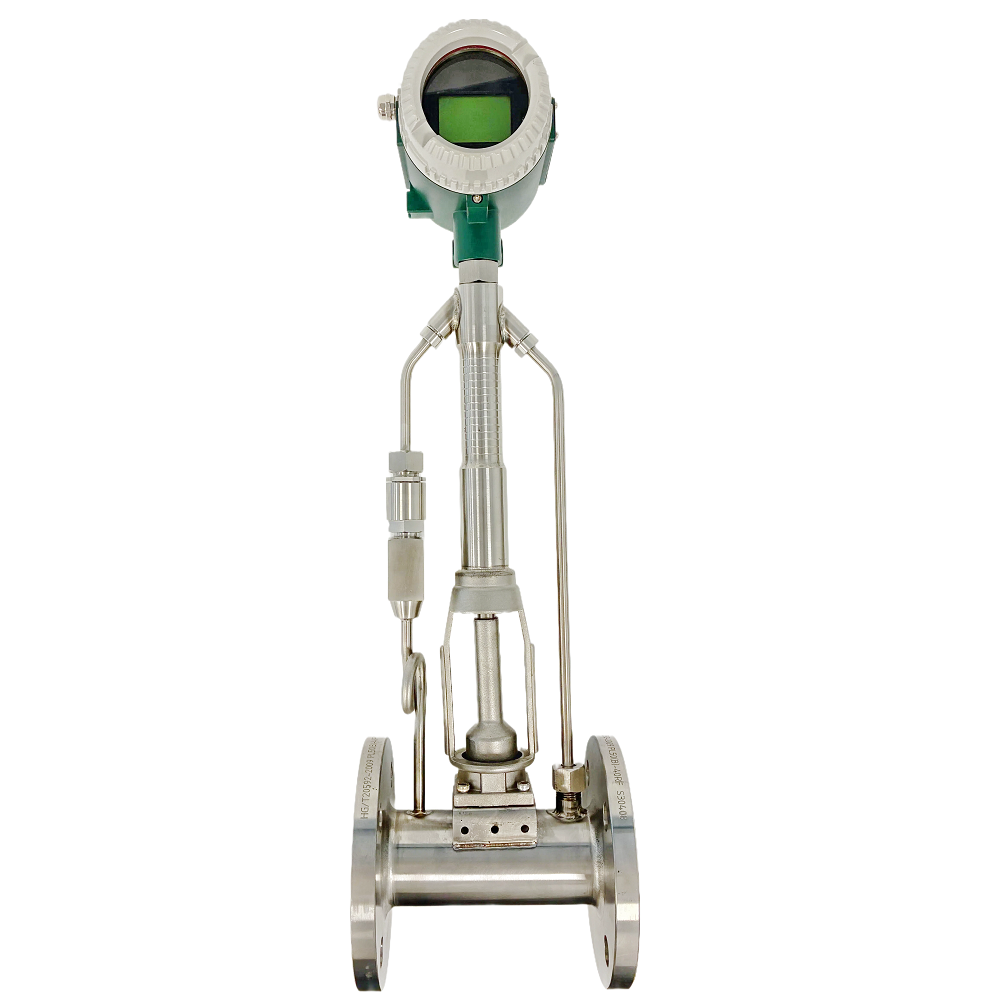
Compensation changes what the meter actually reports. The STLU-VFN steam mass flow meter has built-in temperature and pressure compensation for saturated and superheated steam, with a maximum steam temperature of 500 °C across DN15 to DN300, ATEX approval, and a flow sensor in stainless steel 304.
Compensation matters because steam mass flow depends on density, and density moves with temperature and pressure. A project in Malaysia specifies saturated steam with varying moisture content and superheated steam at high temperature, and explicitly requires temperature and pressure compensation to obtain mass flow. A South African installation of ten units measures saturated steam and simultaneously detects steam temperature and pressure to calculate mass flow.
Sensor and wetted materials
Material selection follows the medium, not the price list. Documented options in this range include stainless steel 304 for the SRK-100 thermal mass flow meter and the STLU-VFN steam mass flow meter, and stainless steel 316L for the SH-CM and SH-CMF-FE Coriolis meters.
Where the medium is aggressive, the specification moves further. A chlorine gas measurement in Malaysia used tantalum wetted material for corrosion resistance. A biogas installation in Singapore used an insertion sensor sprayed with PTFE for slightly corrosive gas. Cryogenic projects call for austenitic stainless steel for toughness at low temperature, with seals selected to prevent leakage at −196 °C.
Outputs and communication protocols
Signal choice has to match the control layer the meter will talk to. The SH-CMF-FE provides 4–20 mA, 0–5 VDC and 1–5 VDC outputs with RS485 or RS232 communication. The SRK-DL provides 0–5 V, 4–20 mA and 1–5 V outputs with RS232/485 and MODBUS, powered by ±15 VDC or 24 VDC. The SRK-100 provides 4–20 mA with RS485, MODBUS RTU and HART. The SH-CM supports 4–20 mA, pulse and frequency outputs with MODBUS RTU, HART, Profibus-DP and Profibus-PA.
In practice: a 4–20 mA loop suits a legacy analogue input card; RS485 with MODBUS suits local logging and small control systems; HART suits configuration and diagnostics on an existing loop; Profibus-DP or Profibus-PA suits plant bus networks, with DP for fast process data and PA for hazardous-area field wiring. Specifying the protocol at the quotation stage avoids a gateway that nobody budgeted for.
Process connections: flanges, wafers, screws and tri-clamp
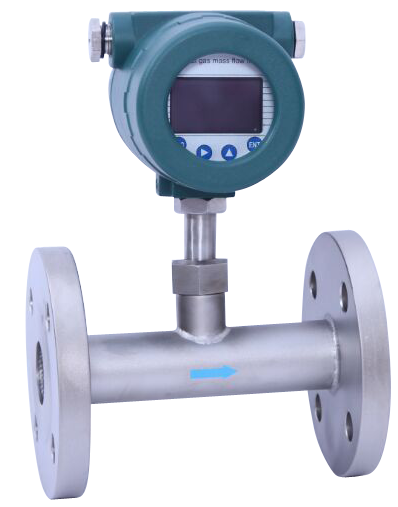
Process connection formats documented for the STLU-VFN steam mass flow meter are flanges, wafers, screws or tri-clamp. Those four formats cover most low-flow installation situations, and each carries its own constraint:
- Flanged — used where line size and pressure rating require a bolted joint; steam measurement projects have been documented on 4-inch, 6-inch, 8-inch and 10-inch pipelines.
- Wafer — a compact body sandwiched between existing flanges, useful where installation space on a skid or in a plant room is limited.
- Screw (threaded) — typical for small-bore instrument lines and injection or dosing points where a flanged joint would be oversized.
- Tri-clamp — a hygienic connection for food, beverage, pharmaceutical and biotech duty, where the line has to be opened for cleaning and where crevices are unacceptable.
The selection rule is simple: the connection follows the mating pipe, the pressure rating and the cleaning regime. It is not a cosmetic choice, and it cannot be changed after the meter body is machined.
Comparison table: documented low flow meter families
| Meter / model | Principle | Flow range | Accuracy | Pressure / temperature | Material and output |
|---|---|---|---|---|---|
| SH-CMF-FE — micro Coriolis mass flow meter | Coriolis | 40 g/h to 1000 kg/hr | ±0.25% to ±0.5% | 30 bar or 100 bar | Stainless steel 316L; 4–20 mA, 0–5 VDC, 1–5 VDC; RS485 or RS232 |
| SH-CM — Coriolis mass flow meter | Coriolis | Approx. 10 kg/hr to 1500 t/h; line size approx. 1 mm to 300 mm | ±0.1% to ±0.5% reported across documented application cases | Fluid temperature −200 °C to 350 °C; IP65; ATEX certified | Stainless steel 316L; 4–20 mA, pulse, frequency; MODBUS RTU, HART, Profibus-DP, Profibus-PA |
| SRK-DL — low flow thermal mass flow meter | Thermal mass | 2 sccm to 30 SL/M | ±1% F.S. | Power supply ±15 VDC or 24 VDC | Stainless steel; 0–5 V, 4–20 mA, 1–5 V; RS232/485, MODBUS |
| SRK-100 — thermal mass flow meter | Thermal mass (inline or insertion) | DN15 to DN2000 | Not stated in the published specification | Gas temperature −20 °C to 300 °C | Stainless steel 304; 4–20 mA; RS485, MODBUS RTU, HART |
| STLU-VFN — steam mass flow meter | Vortex | DN15 to DN300; saturated and superheated steam | Not stated in the published specification | Maximum steam temperature 500 °C; ATEX approved; built-in temperature and pressure compensation | Stainless steel 304 or 316; flanges, wafers, screws or tri-clamp |
The table reflects published specifications and documented application records. Where a value is not stated for a family, it is left blank rather than estimated — a gap in a specification sheet is a question to put to the supplier, not a number to assume.
Application fit: matching a documented project to a meter family
| Documented application | Meter family used | Parameter that decides the choice |
|---|---|---|
| Air leak detection down to 2 sccm (China) | SRK-DL low flow thermal mass flow meter | Sensitivity at the bottom of the 2 sccm to 30 SL/M span |
| Compressed air, natural gas and biogas measurement (UAE, Brazil, Singapore) | SRK-100 / SRK-DL thermal mass flow meters | Wide turndown and inline or insertion mounting in DN15 to DN2000 lines |
| Saturated steam mass flow with compensation (South Africa, Malaysia) | STLU-VFN steam mass flow meter | Built-in temperature and pressure compensation; steam up to 500 °C |
| Diesel and fuel custody transfer (Thailand) | SH-CM Coriolis mass flow meter | ±0.5% or better, pressures to 500 bar, bidirectional measurement |
| Liquid oxygen at −183 °C (India) | SH-CM Coriolis mass flow meter | Cryogenic construction and material toughness at low temperature |
| Nitrogen gas at around 700 bar (Chile) | SH-CM Coriolis mass flow meter | High-pressure design beyond the standard 30/100 bar options |
| Corrosive chlorine gas (Malaysia) | SH-CM Coriolis mass flow meter | Wetted material selection — tantalum documented for this medium |
| High-viscosity syrup (Thailand) | SH-CM Coriolis mass flow meter | Direct mass measurement of viscous media with multi-parameter output |
| High-temperature asphalt (Serbia) | SH-CM Coriolis mass flow meter | High-temperature sensor design with insulation jacket |
Step-by-step: the specification decisions to settle before you choose a model
Work through the list in order. Each decision removes options, and settling them out of sequence produces a meter that fits the pipe but not the process.
- Fix the flow window in one unit. Write down minimum and maximum flow, whether both sit inside the accuracy band, and whether reverse flow has to be measured. Bidirectional measurement is documented for engine return lines in diesel applications.
- Decide the measured quantity. Mass measurement avoids the density conversion that volume measurement needs. Where the medium is steam or a gas whose density varies, confirm whether temperature and pressure compensation is built in, as it is on the STLU-VFN.
- Set the pressure rating. For the SH-CMF-FE this means choosing 30 bar or 100 bar. Check it against documented pressures in the same industry — up to 100 bar in engine feed systems, 500 bar in high-pressure common rail, and around 700 bar in a documented high-pressure nitrogen installation.
- Set the temperature envelope. Fluid temperature range for the SH-CM is −200 °C to 350 °C; gas temperature range for the SRK-100 is −20 °C to 300 °C; maximum steam temperature for the STLU-VFN is 500 °C. High-temperature viscous media such as asphalt at around 250 °C have been handled with an insulation jacket design.
- Choose wetted materials against the medium. Stainless steel 304 and 316L cover most duty; corrosive media have been handled with tantalum wetted parts for chlorine gas and with PTFE-sprayed sensors for biogas.
- Confirm the connection and installation format. Select from flanges, wafers, screws or tri-clamp, and decide between inline and insertion mounting — the SRK-100 supports both. Ask about straight-pipe requirements: in one documented crude oil installation, the Coriolis sensor required no straight runs upstream or downstream.
- Match the output to the control system. Confirm whether the receiving system needs 4–20 mA, pulse, frequency, RS485, RS232, MODBUS RTU, HART, Profibus-DP or Profibus-PA, and confirm the available power supply — 15 V DC or 24 V DC for the SH-CMF-FE, ±15 VDC or 24 VDC for the SRK-DL.
- Check compliance and validate with a trial unit. Confirm the certification required for the area — ATEX certification is documented for the SH-CM and ATEX approval for the STLU-VFN, and diesel projects have specified Ex d or Ex ia. Then validate the specification on a real unit rather than a datasheet, because the documented minimum order quantity is 1 unit.
Use cases: where these specifications are actually tested
Semiconductor, analytical and leak-detection duty
Micro thermal mass flow meters are used in semiconductor, medical, analytical instrument, fuel cell and environmental monitoring applications. A documented air leakage project in China used the SRK-DL to detect leaks down to 2 sccm — approximately 2 ml/min — and that installation has been running for more than ten years.
Fuel, diesel and custody transfer
Coriolis measurement is used for custody transfer at depots, terminals and fuel stations, for engine test benches, fleet management, generator monitoring, marine bunkering and leak detection. Flow rates in those applications run from litres per hour to hundreds of cubic metres per hour, with custody transfer requiring ±0.5% accuracy or better and bidirectional measurement for engine return lines.
Cryogenic liquids and gases
Cryogenic duty covers liquid nitrogen, liquid oxygen, liquid argon, liquid hydrogen, LNG, liquid helium and low-temperature carbon dioxide. A documented installation in India measured liquid oxygen at −183 °C (90 K) for around ten years using an SH-CM Coriolis mass flow meter, and the cryogenic specification operates down to −200 °C.
Corrosive and high-purity chemicals
The SH-CMF-FE is specified for process fluid measurement and control in the food, (petro)chemical and pharmaceutical industries, fermentation equipment, semiconductor processing and fuel cell technology, with documented media including pure water, silicone, aviation kerosene, diesel, supercritical CO2 and silane. For chlorine gas, a Malaysian project used tantalum wetted material to resist corrosion.
Food, beverage and pharmaceutical lines
High-viscosity products are a recurring low-flow problem. A syrup measurement in Thailand used a Coriolis meter reporting mass flow rate, volume flow rate and density from a single sensor, and the case record notes accuracy up to 0.1% in that application. Hygienic installations use tri-clamp connections where the line must be opened for cleaning.
Steam, compressed air and industrial gas
Steam measurement with built-in temperature and pressure compensation is used in power generation, petrochemical, food processing, pharmaceuticals and district heating. Compressed air measurement uses thermal mass flow meters to locate leaks and allocate consumption; the SRK-100 covers air, compressed air, N₂, natural gas, biogas, O₂ and LPG, and a documented biogas installation measured 4-inch pipeline flow at around 10 mbar pressure.
Frequently asked questions
Which certifications and hazardous-area approvals apply to low flow meters from Silver Automation Instruments?
The SH-CM Coriolis mass flow meter is ATEX certified and the STLU-VFN steam mass flow meter is ATEX approved. Silver Automation Instruments states that its products meet CE, ATEX and ISO 9001 standards, and the SH-CM carries IP65 protection. In project specifications, hazardous-area duty has been documented as requiring Ex d or Ex ia certification for diesel and fuel measurement, and ATEX certification for crude oil measurement. Certification has to be matched to the actual zone classification of the installation, not to the meter family alone.
What is the smallest flow rate a low flow meter in this range can measure, and at what accuracy?
Documented low limits are 2 sccm for the SRK-DL low flow thermal mass flow meter, whose full span runs from 2 sccm to 30 SL/M at ±1% F.S.; 40 g/h for the SH-CMF-FE micro Coriolis mass flow meter, which spans up to 1000 kg/hr at ±0.25% to ±0.5%; and 0.5 ccm for micro oval gear flow meters handling oil with viscosity tolerance up to 2000 mPa.s. Coriolis application cases for the SH-CM report accuracy between ±0.1% and ±0.5% depending on duty.
What drives the cost of a low flow meter specification?
Cost follows the specification, not the model number. Pressure rating is a clear example: the SH-CMF-FE is offered at 30 bar or 100 bar, and the higher rating is a different build. Wetted material is another — stainless steel 304 and 316L cover most duty, while corrosive media such as chlorine gas require tantalum parts. Special construction for cryogenic service, high-temperature media with insulation jackets, and bus communication such as Profibus-DP or Profibus-PA rather than a 4–20 mA loop all change the build. Buying factory-direct is the commercial lever Silver Automation Instruments applies, removing distributor margin from the price.
Can I test a single unit before committing to a volume order?
Yes. The documented minimum order quantity is 1 unit, so a low flow meter can be ordered as a single trial unit and validated against the actual medium, flow window and installation before a larger rollout. Silver Automation Instruments also offers OEM/ODM production with logo customization, and each unit is calibration tested as part of quality control.
What lead time should be planned for, and how do I start?
Standard production lead time is documented at 10–12 working days, against a monthly capacity of 2,000 units, with remote support after delivery. Because the specification decisions above determine the build, the fastest route into a project schedule is to fix the flow window, pressure rating, materials, connection and protocol first, then request a quotation against those figures. The product brochure covers the wider instrument range, and specifications can be sent to sales@silverinstruments.com for a documented response.
Conclusion
A low flow meter is only as good as the specification behind it. Flow range, accuracy class, pressure rating, temperature and pressure compensation, wetted material, process connection and communication protocol are not marketing variables — each one removes options, and resolving them in the wrong order produces a meter that fits the pipe but not the process.
The documented envelope is wide: 40 g/h to 1000 kg/hr on the SH-CMF-FE, 2 sccm to 30 SL/M on the SRK-DL, approximately 10 kg/hr to 1500 t/h on the SH-CM, and DN15 to DN300 of steam with built-in temperature and pressure compensation on the STLU-VFN. The parameters that tie a project to one of those families are measurable, askable and confirmable in advance.
Next step
Send the flow window, pressure rating, medium, temperature, connection type and required protocol, and Silver Automation Instruments will return a specification and quotation against those figures — including a single-unit trial where the application needs validation before scale.
Brochure: download the product catalogue (PDF)
Website: silverinstruments.com
Email: sales@silverinstruments.com | Phone: +86 25-52155837
Have Questions or Need More Details?
Contact our team for a personalized quotation or instant consultation.
Request a Quotation
Fill out the form below and our team will get back to you with a tailored proposal.
WhatsApp Direct Chat
Prefer to chat in real-time? Message us on WhatsApp for instant assistance & quick answers.
- Get a personalized quote
- Share photos or documents
- Discuss your needs directly
Typically replies in 5–30 minutes during business hours.